
Introduction: Is Your Wealth Yours, or Are You a Trustee Over It?
In the scale of Islam, wealth belongs to God, and man is a trustee over it to see how he acts. In the “Tree of Faith,” the branch of “Charity” (Sadaqah) represents the “Ripe Fruits” that feed both the near and the far, serving as evidence of the tree’s vitality and the goodness of its roots. Islam has designated charity as a “Proof” (Burhan) of the sincerity of faith; because the soul is naturally inclined to love wealth, it only parts with it through certain conviction in what lies with God.
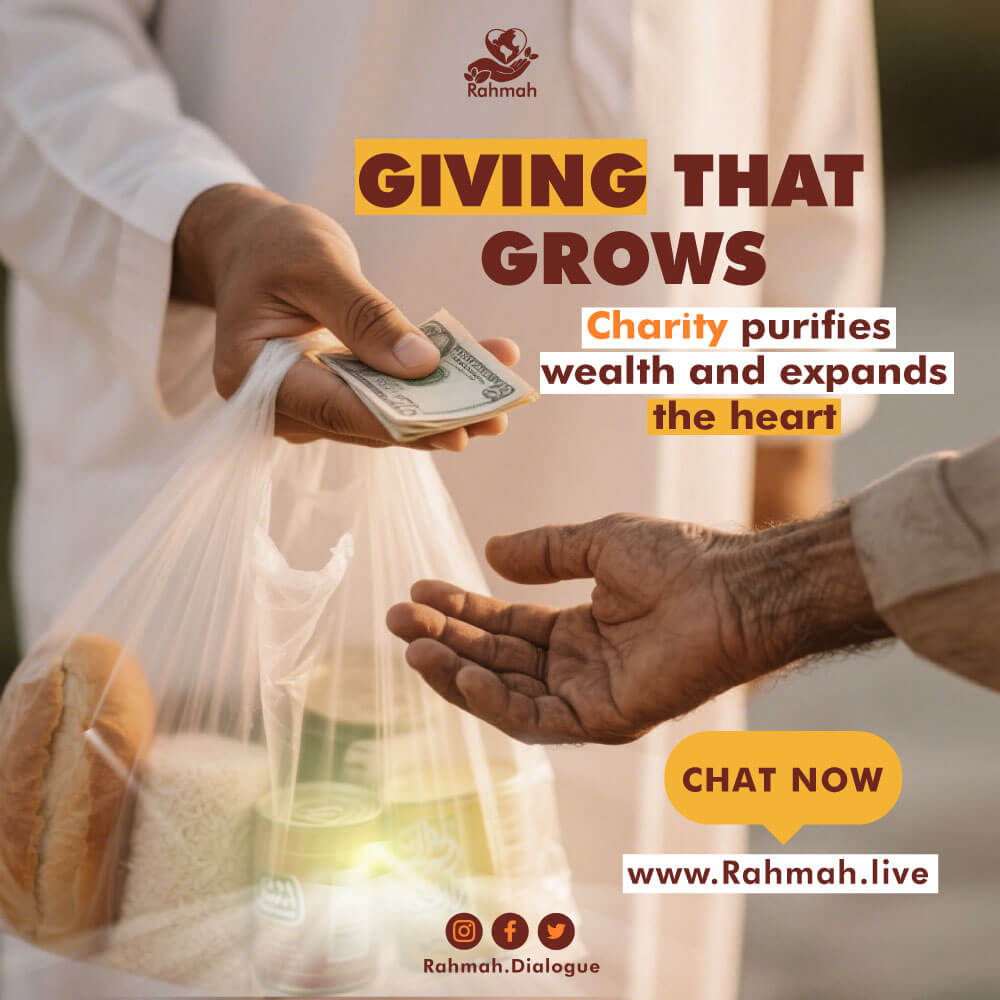
Charity in Islam is not merely a favor from the rich to the poor; it is a “Comprehensive Worship” that purifies the giver before it benefits the receiver, making the “upper hand” a means of spreading tranquility throughout the earth.
The Philosophy of Giving: “You Will Not Attain Piety Until You Spend from What You Love”
The Holy Quran formulated the rules of spending to be a school for refining hearts. This generosity rests on authentic spiritual pillars:
- Purifying the Soul from Greed: Charity is the effective medicine for “miserliness” and “selfishness.” It moves the servant from the narrowness of the self to the vastness of brotherhood: {Take, [O, Muhammad], from their wealth a charity by which you purify them and cause them increase}.
- Certainty in Compensation and Blessing: A believer does not fear poverty from spending; rather, they trust God’s promise: {But whatever thing you spend [in His cause] – He will compensate it}. Charity erases the “ill-fortune” of the forbidden, invites heavenly blessings, and increases wealth in growth and goodness.
- Protection from Evil Ends: Charity is a “Fortified Fortress” by which God wards off calamity and extinguishes Divine displeasure. It is a profitable trade with the Creator that guarantees concealment in this world and shade on the Day of Resurrection.
The Inclusivity of Kindness: “Every Good Deed is Charity”
The greatness of this branch lies in the fact that it is not limited to currency; it extends to include all facets of goodness:
- Monetary Charity: Performing the obligatory Zakat, rushing to voluntary alms, relieving the distressed, and spending on relatives and the needy, seeking only God’s Face—without ostentation or seeking fame.
- Charity of Limbs and Speech: A kind word that mends hearts, a smile in the faces of people, guiding the lost, removing obstacles from the path, and mediating justly between disputants. Every movement made for the benefit of creation is a recorded “Charity.”
- Ongoing Charity (Sadaqah Jariyah): Giving that does not cease with the giver’s death, such as beneficial knowledge, a well from which people drink, or a tree under which they find shade, reinforcing the idea of “Survival through Impact.”
Spiritual and Social Impact: A Society of One Body
When the character of charity prevails in the nation, magnificent gains are achieved that heal the wounds of society:
- Quelling Malice and Envy: When the needy see the hand of the wealthy extended with mercy, grudges dissolve from hearts and are replaced by prayers and affection, preserving social peace.
- Establishing Spontaneous Solidarity: Charity transforms society into a “large family” where the strong feel for the weak. No one sleeps hungry while their neighbor is full, responding to the Prophetic guidance on mutual compassion.
- Purifying Society from Greed: Charity breaks the grip of “materialism” over souls, making people compete in “giving” instead of “hoarding,” achieving a blessed economic flow.
Spiritual Accountability: “Secret Charity Extinguishes the Lord’s Wrath”
This branch calls us to scrutinize the etiquette of giving:
- Concealing Charity: A believer ensures that their “left hand does not know what their right hand spends” to preserve the dignity of the poor and ensure sincerity, keeping the deed purely for God alone.
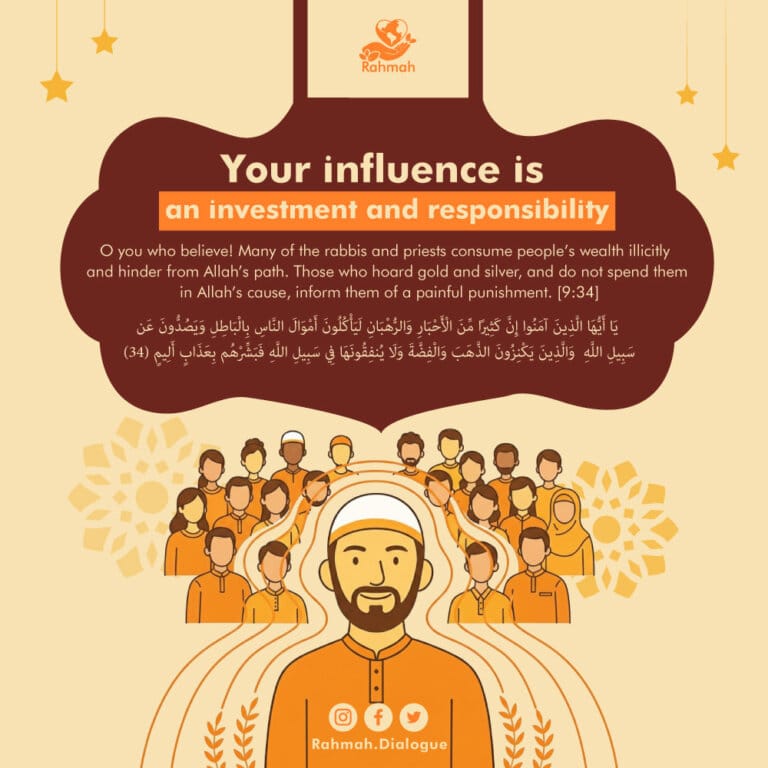
- Avoiding Reminders and Injury: Caution against following charity with reminders of one’s favor or words that hurt the needy. A kind word and forgiveness are better than charity followed by injury.
Conclusion: A Seed on Earth and a Harvest in Heaven
The branch of charity is the pulse of life in the heart of the believer. It tells us that what we keep for ourselves may perish, but what we give for God is what remains and grows. Whoever is generous with their wealth, effort, and state toward the servants of God, God will be generous with His vast grace toward them, making their charity a cool shade on a Day when there is no shade but His.
We invite you to reflect on this overflow of generosity in “Compassionate Dialogue”: How can a simple act of charity change a human life and purify the soul of the giver? And how do the values of “Giving and Solidarity” contribute to building a cohesive Islamic society ruled by justice, affection, and peace?

 English
 Español
 Português do Brasil
 Français
 Português
 Tagalog
 日本語
日本語 简体中文
简体中文 Русский
 Italiano
 Deutsch
 Türkçe
 العربية