
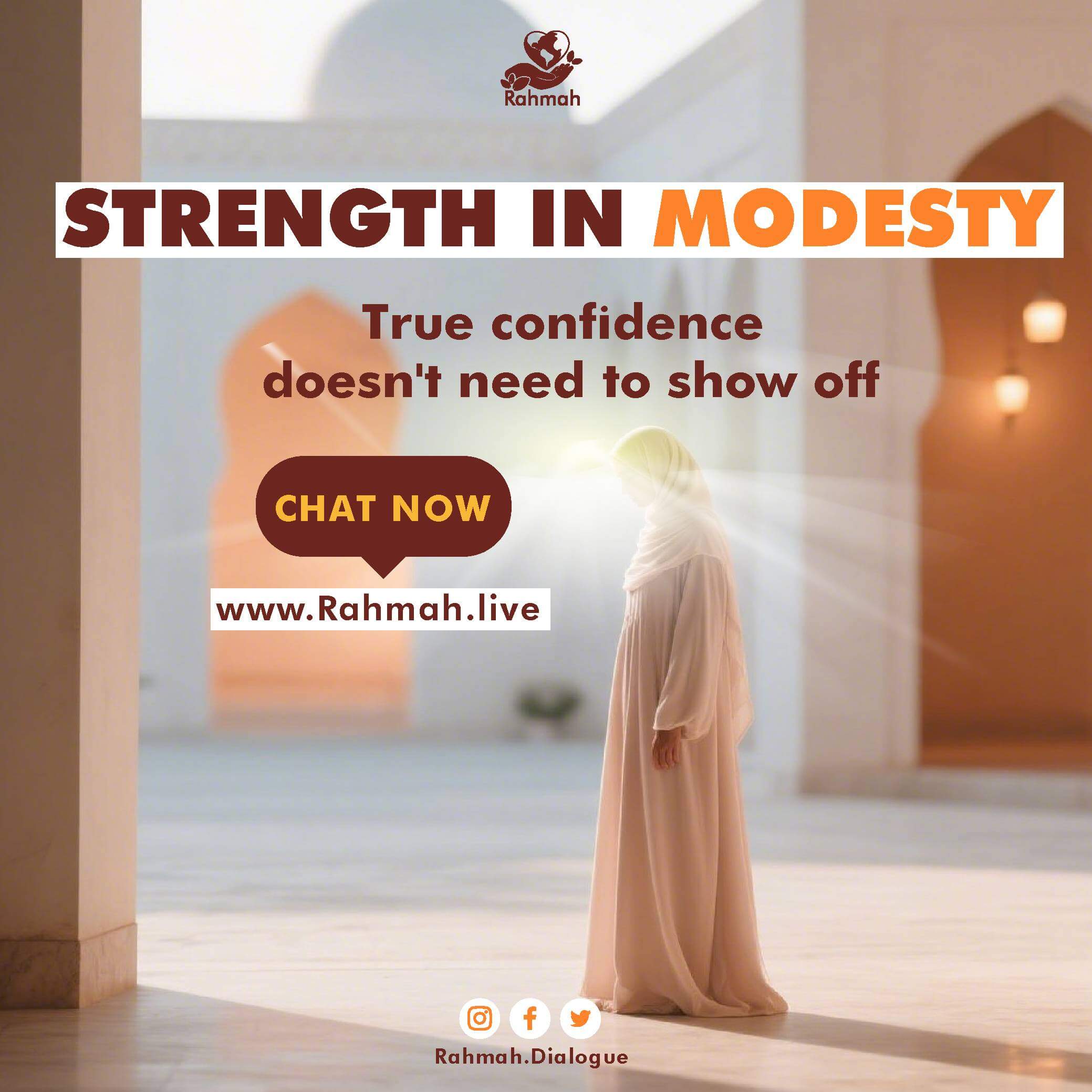
Introduction: Can a Single Trait Summarize All of Faith?
In an age that sometimes celebrates excessive boldness and the breaking of boundaries, Islam elevates “Modesty” (Al-Haya’/الحياء) as a supreme value that regulates human movement and balances desires with dignity. In the “Tree of Faith,” modesty represents the “Protective Fence”; that silent power that prevents the soul from sliding toward the ugly and constantly pushes it toward all that is beautiful and refined.
Modesty in Islam is not weakness or a shyness that prevents one from demanding their rights. Rather, it is “the heart being filled with the greatness of the Creator,” which generates a sense of dignity that prevents a person from committing what is shameful.
The Philosophy of Modesty: The Internal Balance of Behavior
Modesty is the soul’s natural aversion to everything that is considered wrong by Divine law or noble custom. In the faith-based perspective, it consists of two levels:
- Modesty before God (The Level of Ihsan/إحسان): This is the highest rank; where the believer senses the Creator’s watchfulness in private and public. They feel too modest to let God see them committing a sin. This feeling is the essence of “Self-Monitoring” that builds a living conscience.
- Modesty before People (The Level of Muru’ah/مروءة): This drives the Muslim to adhere to good manners, rising above foul language and bad actions, while maintaining privacy and decency (Hishmah/حشمة).
Modesty as a Source of All Good
The Prophet ﷺ linked faith and modesty in an inseparable bond. The effects of this branch of faith manifest in:
- Chastity and Purity (‘Iffah/عفة): Modesty is the primary driver of chastity. A believer lowers their gaze, guards their tongue, and adheres to a modest appearance, which preserves their dignity and protects society from moral decay.
- Honesty and Clarity: A modest person does not lie or betray; their modesty before themselves and their Lord prevents them from practicing deception.
- Refinement in Speech: Modesty appears in choosing kind words and avoiding obscenity, making the language of society one of construction and mercy.
Correcting Concepts: Modesty Does Not Hinder Truth
It is important to realize that faith-based modesty does not mean “passivity” or “silence regarding falsehood.” The Prophet ﷺ was the most modest of people, yet he was the bravest in speaking the truth and facing injustice.
- Modesty in Seeking Knowledge: Modesty should not stop a Muslim from asking about their religion or worldly affairs. It was said of the women of the Ansar that their modesty did not prevent them from seeking a deep understanding of the faith. This is “Praiseworthy Modesty” that builds rather than destroys.
Social Impact: A Society of Dignity
When the character of modesty spreads, society transforms into a safe and respectful environment:
- Protection of Rights: A modest person feels too shy to oppress others or take their rights, which reduces conflicts.
- Family Cohesion: Modesty and decency preserve the sanctity of homes and establish relationships based on mutual respect between men and women.
- Elevation of Public Morals: Modesty becomes the “Public Norm” that rejects behaviors that offend healthy human nature.
Conclusion: Modesty is Life for the Heart
The branch of modesty is proof of the purity of one’s nature and the strength of their connection to the Creator. It is the character that beautifies whatever it touches. It is a call to live with awake hearts that respect the sanctity of the Creator, value the dignity of the self, and observe the rights of others.
We invite you to reflect on this great character: How can modesty be a compass guiding us toward excellence in word and deed? And how do “Decency and Dignity” contribute to building a cohesive Islamic society ruled by justice, affection, and peace among people?

 English
 Español
 Português do Brasil
 Français
 Português
 Tagalog
 日本語
日本語 简体中文
简体中文 Русский
 Italiano
 Deutsch
 Türkçe
 العربية