
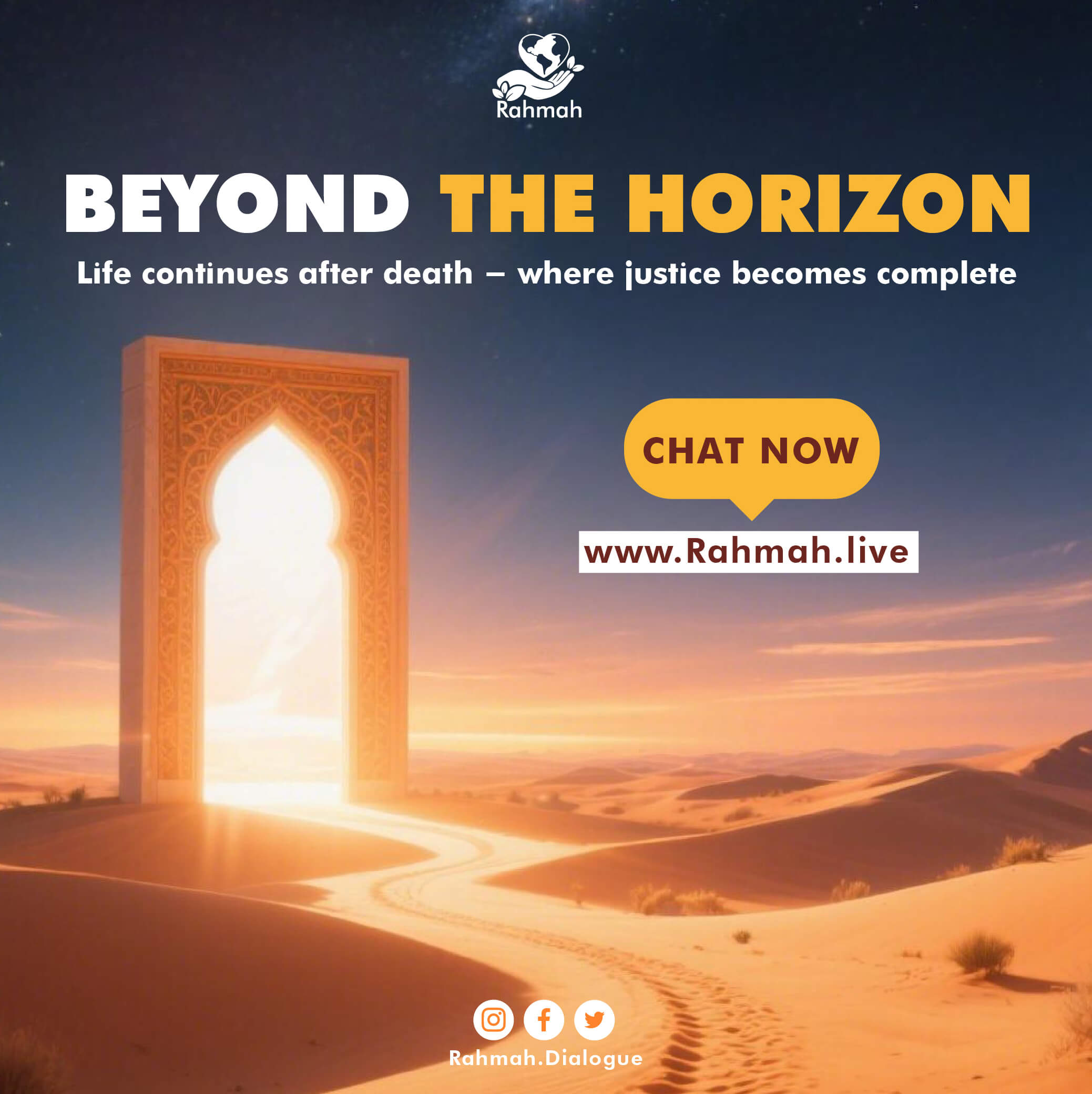
Introduction: Does the Story End at the Grave?
Humanity has long been troubled by the idea of “incomplete justice” in this life. We see victims who pass away without getting their rights back, and tyrants who die without being held accountable. Is this existence just a cosmic accident that ends in dust?
In the “Tree of Faith,” belief in the Last Day (Al-Yawm al-Akhir/اليوم الآخر) is the horizon toward which the branches grow. It is the certainty that this life is only the first chapter of a long story, and that there is a “Day” when the records will be opened and scales of justice will be set—scales that do not miss even a speck of dust. This faith gives life its “seriousness” and turns it from a playground into a field of responsibility.
To believe in him is to believe in the man described as a “Mercy to the Worlds” (Rahmah lil-‘Alamin/رحمة للعالمين), who did not come to cancel what came before him, but to “perfect noble character.”
Beyond Death: A Journey Toward the Truth
Belief in the Last Day in Islam is not just about the fear of punishment; it is a complete system of hope and justice built on two pillars:
- The Resurrection (Al-Ba’th/البعث): The confirmation that death is not “nothingness,” but a transition. Just as the earth brings out green life from a dry seed, the Creator who started life the first time is capable of bringing it back.
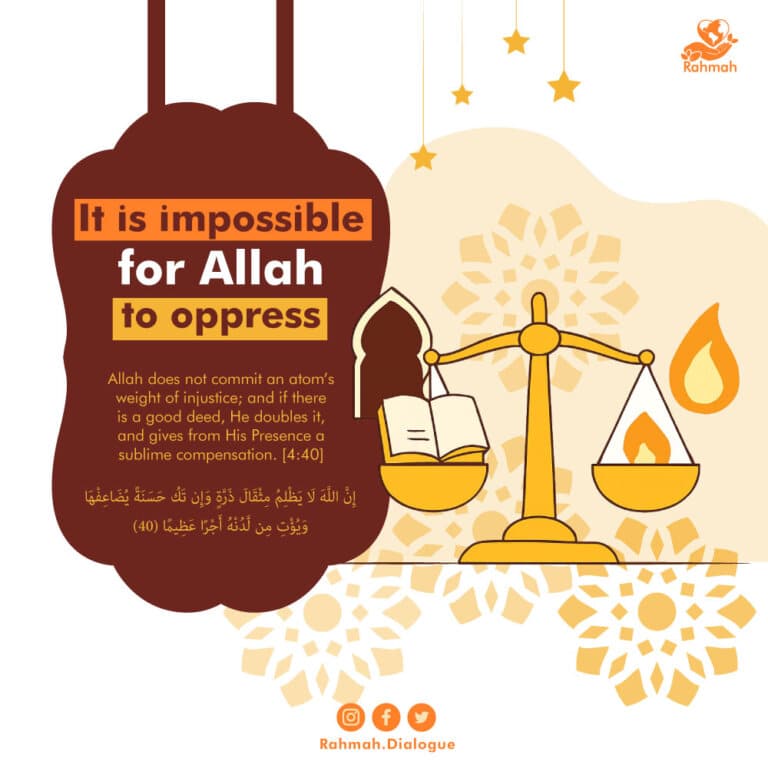
- The Reckoning (Al-Hisab/الحساب): This is the core of justice, where every person faces the results of their actions. There are no favors and no lost rights. It is the moment when the patient find the fruits of their patience, and the kind find their reward.
The Behavioral Impact: The Conscience That Never Sleeps
When a person is certain that a “Reckoning” awaits them, the rhythm of their daily life changes:
- Self-Accountability: The Day of Judgment becomes an “inner moral compass.” A merchant who believes in the account does not cheat, and an official who remembers standing before God does not oppress. The monitoring comes from within, not from fear of cameras or the law.
- Psychological Peace: This faith gives incredible comfort to the oppressed. They know that the truth will not be lost and that fair justice is coming. This certainty is the “cure” for the despair that people feel due to life’s tragedies.
- Maximizing the Value of “Now”: This life is seen as the “farm for the Hereafter” (Al-Akhirah/الآخرة). This makes every moment precious, and every good deed—no matter how small—a winning investment in an eternal future.
Proof from Logic and Instinct
Islam points out that it makes no sense for the good and the evil to have the same ending. A sound mind rejects the idea that the fate of a person like Mother Teresa and a person like Hitler should be exactly the same: dust and silence.
Therefore, the Last Day is a logical necessity for the concept of “Divine Justice.”
Conclusion: Living for a “Better Tomorrow”
Belief in the Last Day does not mean leaving work in this world or being passive. Instead, it means building this world with the “mindset of a traveler” who leaves a beautiful mark at every stop. It is a call to free humans from existential anxiety and the grip of materialism, allowing them to live with a higher purpose.
We invite you to reflect on this great concept of justice: How can the certainty of a Day of Reckoning change the way we treat one another? How can we work together to build a fair society, driven by the desire for the Creator’s pleasure and the reward of Paradise (Jannah/جنة)?


 English
 Español
 Português do Brasil
 Français
 Português
 Tagalog
 日本語
日本語 简体中文
简体中文 Русский
 Italiano
 Deutsch
 Türkçe
 العربية