
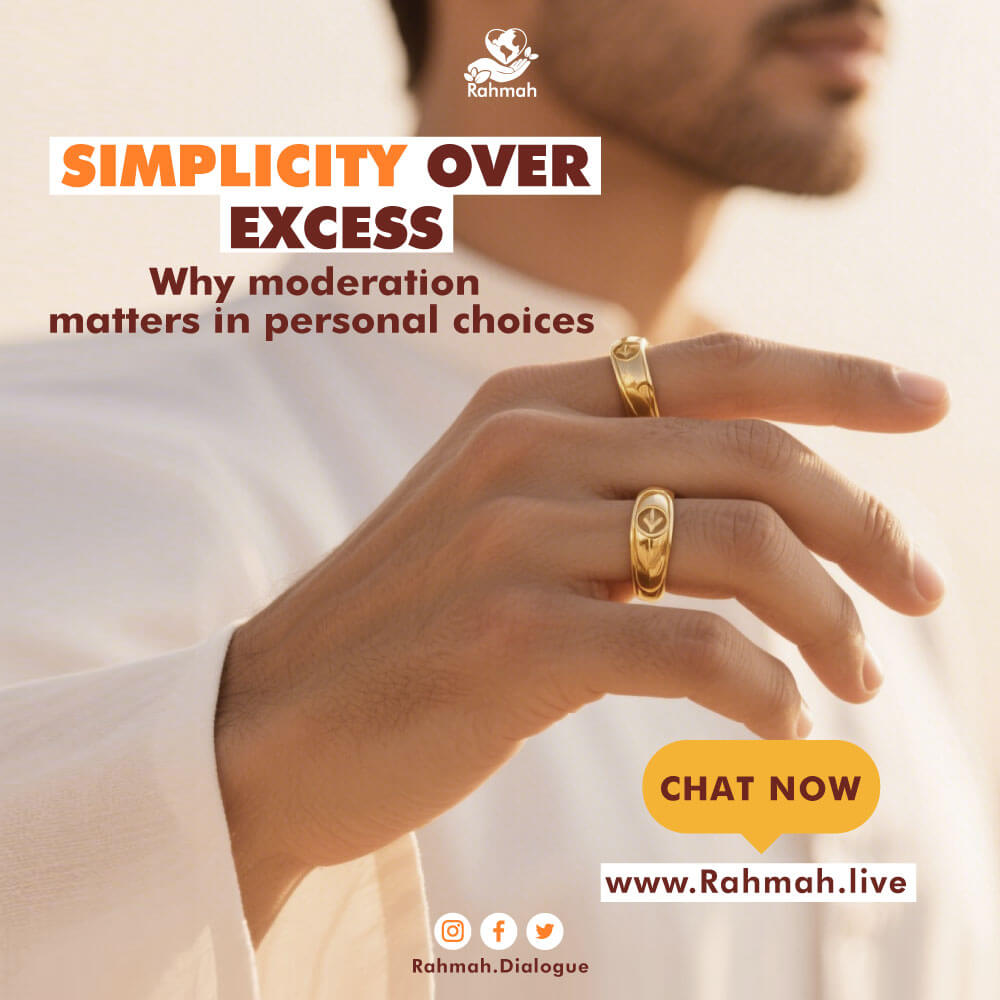
Introduction: Where Does a Man’s Beauty Lie?
In the scale of Islam, a man’s beauty does not lie in the glitter of gold or the softness of silk, but in the strength of his faith, the soundness of his intellect, and the gallantry of his actions. In the “Tree of Faith,” the branch of “The Prohibition of Gold and Silk for Men” represents the “Hard Bark” that protects the tree and grants it strength and prestige. Islam designated gold and silk as adornments for women and prohibited them for men, ensuring that a man maintains a character suited for his role of guardianship, diligence, and hard work.
Avoiding these adornments in Islam is a “Training in Asceticism.” A true believer realizes that his body was created to be a tool for obedience and sacrifice, not a vessel for luxury and softness that might scratch the natural disposition (Fitrah) of manhood upon which God created him.
The Philosophy of Distinction: “Lawful for the Females of My Nation, Forbidden for its Males”
The Prophet ﷺ formulated the rule of attire clearly when he held gold and silk and said: “These two are forbidden for the males of my nation, and lawful for their females.” This prohibition rests on firm spiritual pillars:
- Protecting Natural Disposition and Character: Both men and women have a nature suited to their roles in life. While silk and gold suit the delicacy and adornment of women, a man’s character demands seriousness and distance from excessive finery that borders on feminine traits, preserving his prestige and strength of personality.
- Combating Arrogance and Luxury: Gold and silk represent the peak of material luxury. Wearing them may breed vanity and conceit within the soul, contradicting the character of “Humility,” which is a trait of the servants of the Most Merciful. A believer humbles himself before God through his attire.
- Saving for the Hereafter: Islam raises the believer to view this world as a passage, not a destination. Whoever leaves gold and silk in this world out of humility and compliance, God will reward them with the gold and silk of Paradise, certain that “He who wears silk in this world will not wear it in the Hereafter.”
Requirements of Islamic Character: Moderation, Not Harshness
This branch manifests in a believer’s conduct, making his appearance a symbol of dignity and cleanliness without exaggeration:
- Rising Above Gold Jewelry: A believer stays away from pure gold (such as gold rings or watches), contenting himself with a “silver ring” following the example of the Prophet ﷺ, so that his appearance reflects strength and gravity.
- Simplicity in Dress: A believer ensures his clothes are clean and tidy but avoids “natural silk” that breeds softness. He prefers attire that aids him in “praiseworthy toughness” and carrying out life’s responsibilities.
- Understanding Legal Exemptions: Knowing that Islam did not forbid beauty, but permitted silk for necessity (such as skin conditions) or if it is a small amount mixed with other materials, showing that legislation considers human need while maintaining the general principle.
Spiritual and Social Impact: A Society of Seriousness and Solidarity
When the men of the nation adhere to this character, magnificent moral and social fruits emerge:
- Breaking the Edge of Classism: When wealthy men avoid displays of extravagant luxury like gold and silk, negative feelings in the hearts of the poor are lessened, and the general appearance of society becomes more cohesive and humble.
- Safeguarding the Identity of Generations: Young boys are raised on the meanings of “Manhood and Toughness,” creating a solid generation that is not deceived by glittering appearances nor enslaved by luxurious fashions that kill the spirit of creativity and work.
- Directing Wealth Toward Development: Funds that would have been spent on the vanity of gold and silk are directed in Islam toward charity, development, and beneficial trade, achieving prosperity for the entire society.
Spiritual Accountability: “Allah Loves to See the Trace of His Blessing”
This branch calls us to examine our concept of beauty:
- Adorning Oneself with Piety: A believer is certain that the most beautiful thing he can wear is the “garment of piety,” and that good character is the ornament that never fades.
- Commitment to Prophetic Guidance: The Prophet ﷺ was an example of simplicity and cleanliness; he loved perfume and good clothing but rose above gold and silk out of asceticism and desire for the Hereafter.
Conclusion: A Pure Character and a Noble Soul
The branch of not wearing gold and silk for men is a message overflowing with wisdom and balance. It tells us that a man’s dignity is in his substance, not his appearance. Whoever rises above the ornaments of the vanishing world in compliance with God’s command, God will dress them in the robe of prestige in this world and adorn them with the jewelry of honor in the Gardens of Bliss.
We invite you to reflect on this elevation in appearance: How can staying away from luxury refine a man’s personality and build a strong society? And how do the values of “Humility and Dignity” contribute to building a cohesive Islamic society ruled by justice, affection, and peace?

 English
 Español
 Português do Brasil
 Français
 Português
 Tagalog
 日本語
日本語 简体中文
简体中文 Русский
 Italiano
 Deutsch
 Türkçe
 العربية