
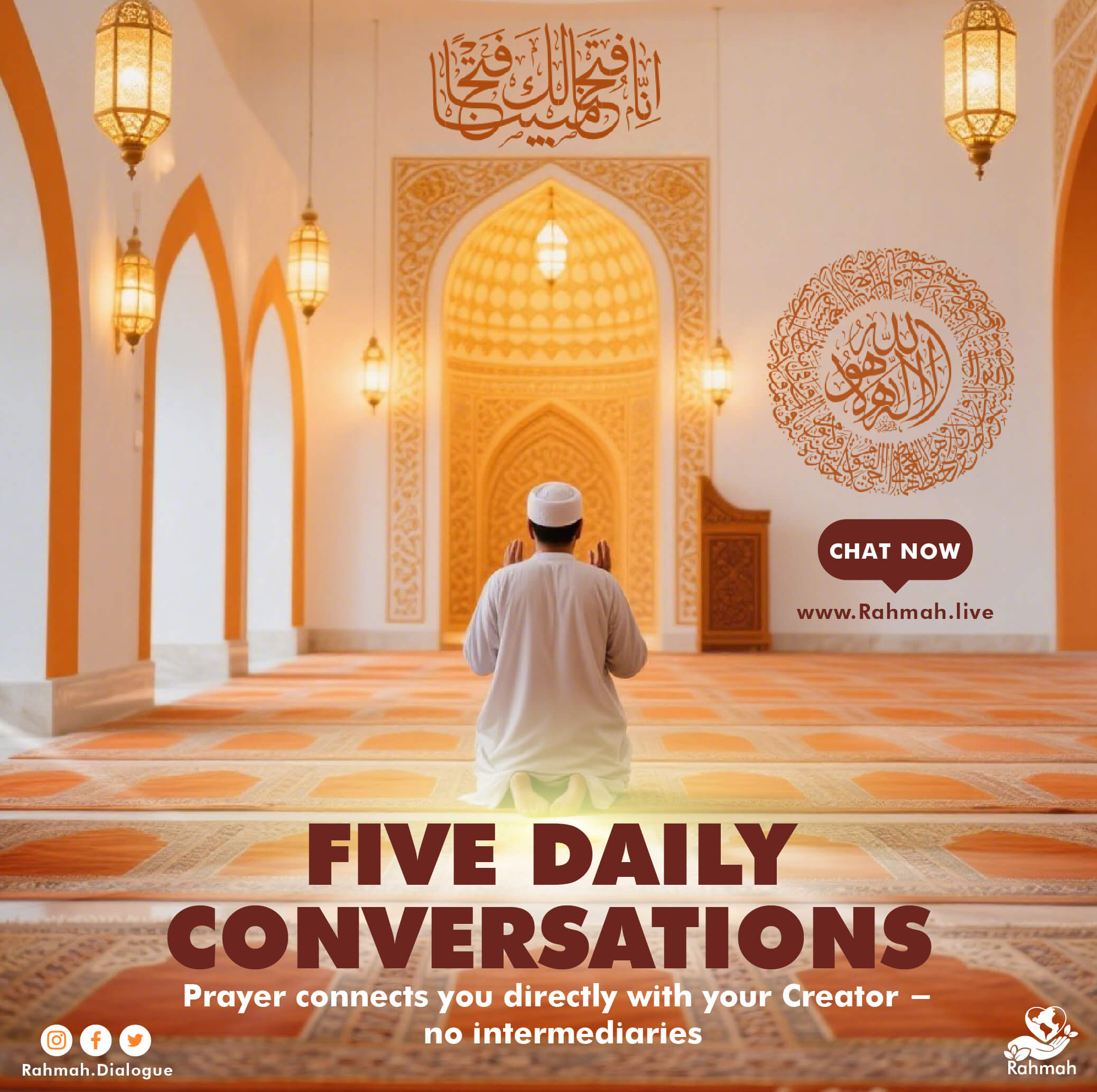
Introduction: Do We Need a “Break” from the World’s Noise?
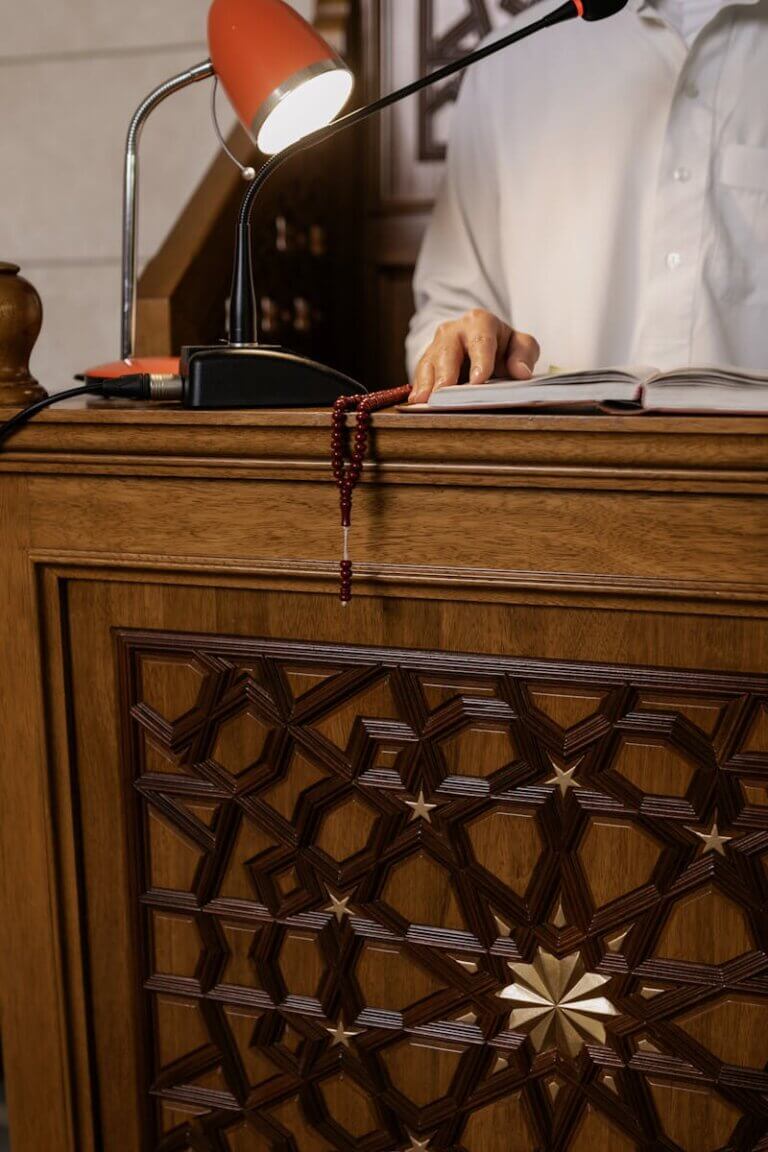
In the hustle and bustle of modern life, and the fast pace of events chasing us, we often feel like we are losing our internal compass. We all need moments of silence and reflection to return to ourselves and our Creator. In the “Tree of Faith,” prayer (Salah/صلاة) represents the daily nourishment that keeps the branches fresh.
It is not just a physical ritual; it is a “time oasis” where a person seeks refuge five times a day to recharge with peace and strength.Performing prayer in Islam is a declaration of a continuous “connection”—which is the literal meaning of the Arabic word Salah. It is the unbreakable link between the person in need and their Self-Sufficient Creator
The Art of Presence: Beyond Physical Movements
Performing prayer in the Islamic concept goes beyond “mechanical performance.” It is an integrated process that includes:
- Purity of Appearance and Inner Self: Prayer begins with Wudu (وضوء/Ablution), a symbolic and practical washing of the limbs with water. This prepares the soul to move from the material world to the Divine presence with cleanliness and dignity.
- Heartfelt Presence (Khushu’/خشوع): The true value of prayer lies in “absolute focus.” The worshiper puts the world behind them to meditate on the meanings of the words they speak. This develops a high capacity for mindfulness and psychological clarity.
- A System of Timing: Prayer is distributed throughout the day (Dawn/Fajr, Noon/Dhuhr, Afternoon/Asr, Sunset/Maghrib, and Night/Isha). This creates an “organized rhythm” for a Muslim’s life, teaching the value of time and commitment.
Prayer as a Tool for Psychological and Social Transformation
Why does Islam insist on this repeated daily meeting? Because its impact extends to reshaping the character of the individual and society:
- A Sanctuary for Moral Refinement: True prayer is that which leaves an impact “outside the prayer mat.” It discourages evil and wrongdoing because it keeps the conscience awake and mindful of God’s greatness, preventing a person from slipping into injustice or corruption.
- A Haven for Psychological Comfort: The Prophet Muhammad ﷺ used to say: “Give us comfort with it, O Bilal.” In prostration (Sujud/سجود), a person finds a place to release their worries and burdens, drawing a tranquility that material things cannot provide.
- A School of Absolute Equality: In congregational prayer, the gap between the manager and the worker, the rich and the poor, disappears. Everyone stands in one line, bowing and prostrating together. This scene anchors the idea that human dignity is not measured by positions, but by piety and spiritual height.
Harmony Between Soul and Body
Despite its spiritual essence, prayer involves the body in worship. Its movements—standing, bowing (Ruku’/ركوع), and prostrating—are exercises in humility and stillness.
This embodies the Islamic concept of the “Integrated Human” who does not separate the needs of the soul from the requirements of the body.
Conclusion: A Call to Tranquility
Performing prayer is an invitation for every human to find their “center” in this vast universe. It is a daily exercise in freedom—freedom from life’s pressures and freedom from being a slave to materialism. It is a moment to catch one’s breath in the race of life, so we can return to the world with more merciful hearts and more balanced minds.
We invite you to reflect on this unique spiritual system: How can five daily pauses change our view of time, others, and ourselves? Understanding the language of prayer is understanding the secret of inner peace that every human seeks.
 English
 Español
 Português do Brasil
 Français
 Português
 Tagalog
 日本語
日本語 简体中文
简体中文 Русский
 Italiano
 Deutsch
 Türkçe
 العربية