
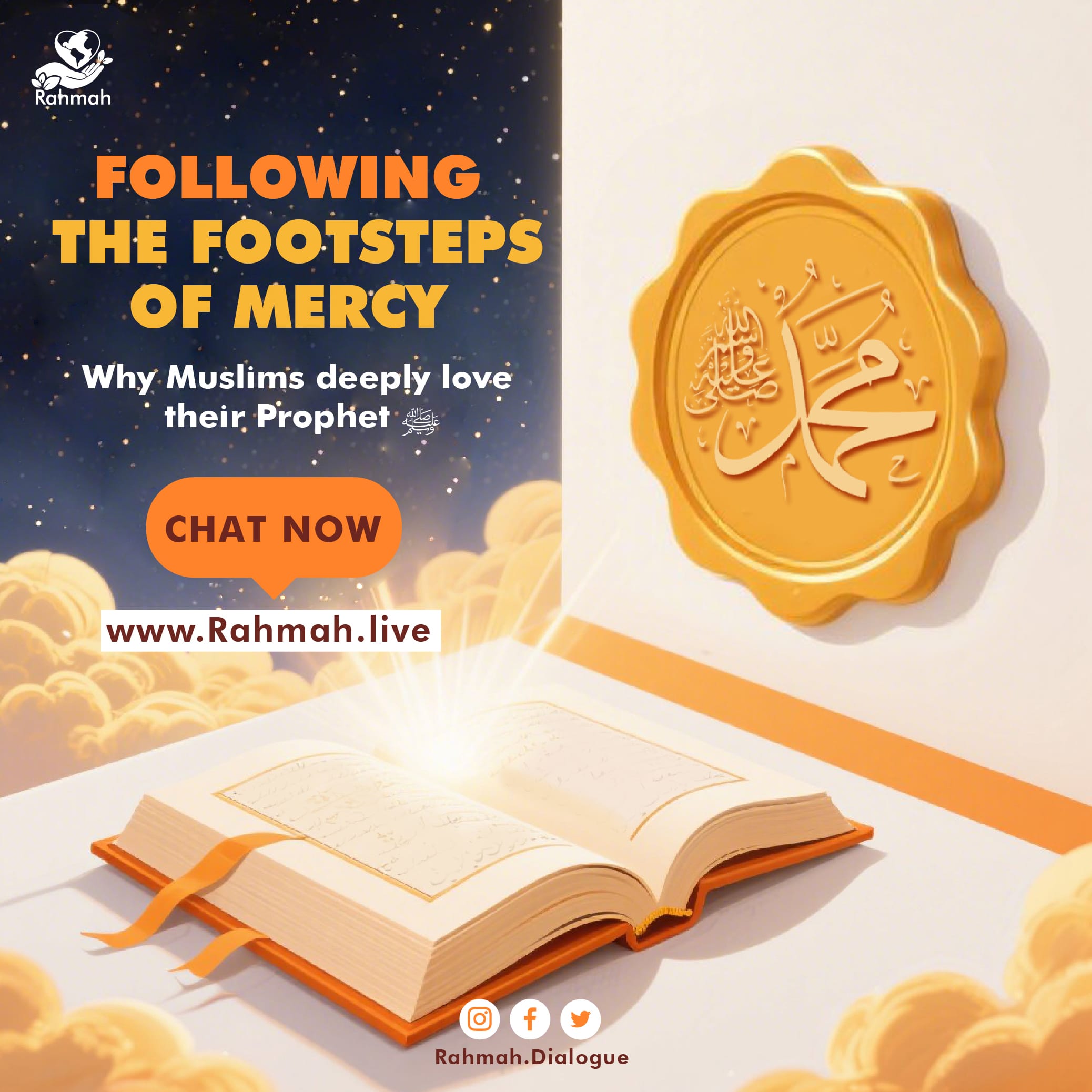
Introduction: Can Love be a Moral Covenant?
In human relationships, love is the strongest motivation for change; we naturally imitate those we love and adopt the values of those we admire. In the “Tree of Faith,” love for the Prophet Muhammad ﷺ represents the “Sap” liquid of the trees (An-Nasgh/النسغ) that flows through the branches to give them life. It is not just a warm feeling; it is the “driving energy” that transforms Islamic teachings from dry texts into a living practice overflowing with beauty and mercy.
Love for the Prophet ﷺ in Islam is the bond that unites the majesty of the “Message” with the beauty of “Humanity.” It is the key to completing one’s faith.
The Philosophy of Love in Islam: Why Muhammad ﷺ?
Some might ask: Why does the Prophet ﷺ hold such a central place in the hearts of Muslims?
- The Most Perfect Human Model: Love here is an “admiration for moral perfection.” We love his unbroken honesty, his mercy that included even those who harmed him, and his humility while he was at the height of his power.
- Gratitude for Guidance: A Muslim sees the Prophet ﷺ as the savior who led humanity out of confusion and into the light of certainty (Yaqin/يقين). Loving him is an act of gratitude for the source of light.
- A Condition for Complete Faith: The Prophet ﷺ taught that faith does not reach its peak until a person loves him more than themselves or their own family. This is because loving him means fully choosing the values he brought and putting “Principle” above “Personal Desire” (Hawa/هوى).
From Emotion to Action: How do we Love “by Practice”?
In the Islamic vision, love is an “Action” before it is a “Word.” Its practical forms include:
- Imitating Character (Akhlaq/أخلاق): The true lover is not just the one who writes poetry, but the one who draws inspiration from the Prophet’s patience during crises, his loyalty to promises, and his kindness to the weak. Following his character is the sincerest expression of love.
- Reviving the Sunnah as a Model of Elegance: Reviving his traditions (Sunnah/سنة) means holding onto his manners in eating, drinking, treating neighbors, and protecting the environment. It is an attempt to make “daily life” a piece of art that mimics the beauty of his life.
- Constant Remembrance (Salat ‘ala an-Nabi/الصلاة على النبي): Sending blessings upon the Prophet ﷺ is a spiritual bridge. it keeps his model present in the mind and heart, encouraging the believer to constantly check their behavior against the scale of “Muhammadan Character.”
The Social Impact: Love that Unites, Not Divides
Love for the Prophet ﷺ is the “Common Ground” that melts away racial and geographical differences between millions:
- Unity of Feeling: Muslims from the Far East to the Far West gather around his love, creating a “spiritual fabric” that unites people.
- Spreading Mercy: Since his message was a “Mercy to the Worlds,” loving him pushes followers to be messengers of mercy in their societies—serving humans, being kind to animals, and building the earth.
- A Living Role Model: In a world lacking true role models, love for the Prophet ﷺ provides a “historical and realistic hero” for youth to follow in his courage, ambition, and purity.
Conclusion: Love as a Path to Peace
Love for the Prophet Muhammad ﷺ is a call to elevate humanity. Whoever loves the “Gifted Mercy” cannot be cruel, and whoever loves the “Truthful and Trustworthy” (As-Sadiq al-Amin/الصادق الأمين) cannot be a traitor. It is the love that builds, unites, and gives humans an accurate compass toward Truth and Beauty.
We invite you to explore the dimensions of this deep love: How can following a great historical personality change our reality today? And how does his life story help build bridges of understanding and respect among all the peoples of the earth?

 English
 Español
 Português do Brasil
 Français
 Português
 Tagalog
 日本語
日本語 简体中文
简体中文 Русский
 Italiano
 Deutsch
 Türkçe
 العربية