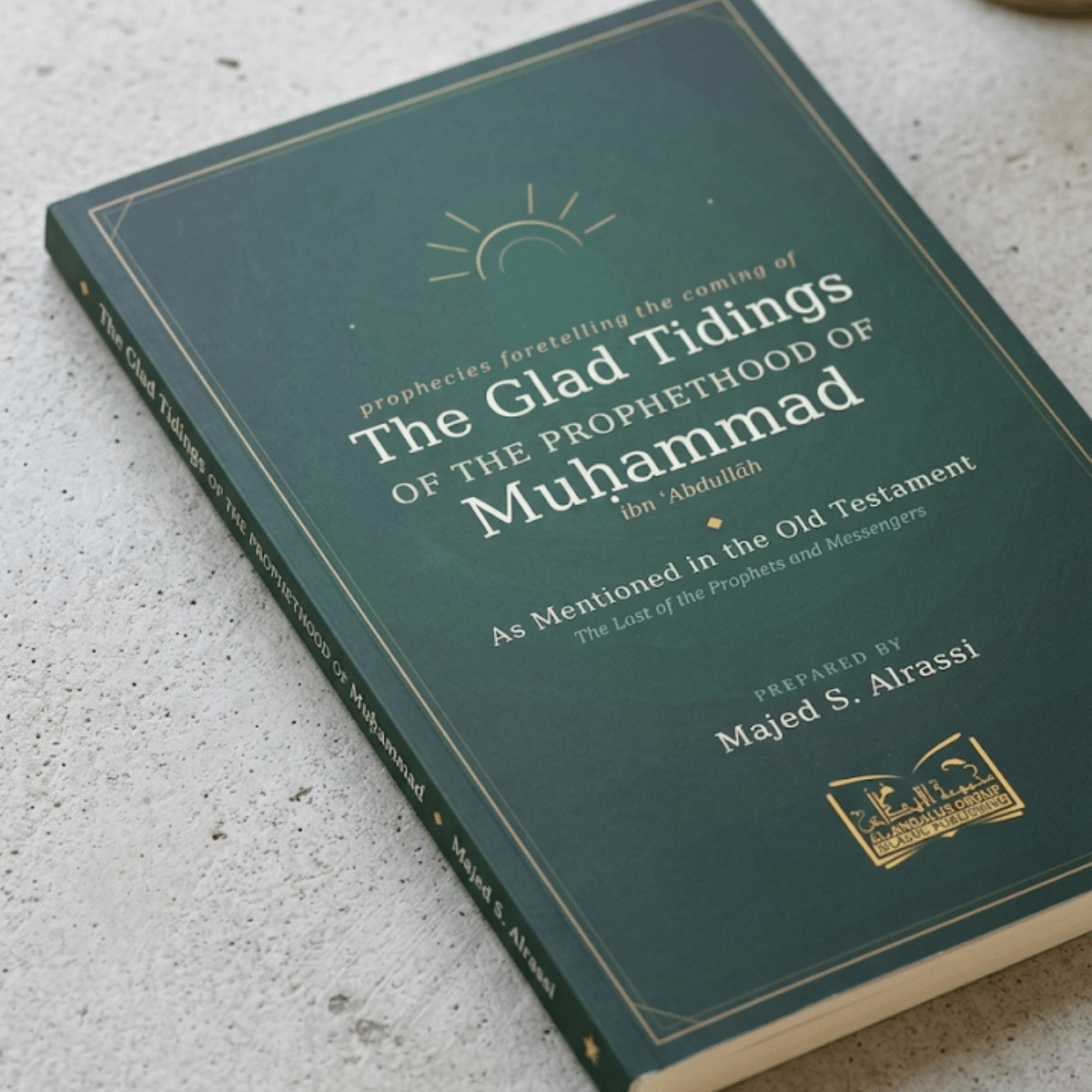
The Glad Tidings
Glad Tidings of The Prophethood of Muhammad: Prophecies in the Old Testament - Book 2

Glad Tidings of The Prophethood of Muhammad: Prophecies in the Old Testament

By: Majed S. Al-Rassi

This book compiles forty-one biblical prophecies from the Old and New Testaments to argue that Muhammad’s arrival was divinely anticipated. By identifying specific titles and historical markers, the author suggests that ancient scriptures provide a detailed blueprint of the final prophet’s lineage, character, and mission to all of humanity.

A key theme is the shift of prophetic authority from the Children of Israel to the descendants of Ishmael. The work interprets biblical geography and character traits, such as Muhammad’s unlettered nature and his physical “seal,” as definitive proof that the divine message was intentionally transferred to a new branch of the Abrahamic family.

Ultimately, the book presents Muhammad as the “Seal of the Prophets” who brought a universal “fiery law” to replace previous local dispensations. It frames Islam not as a new religion, but as the perfect restoration and completion of the monotheistic faith originally taught by messengers like Moses and Jesus.

The book “The Glad Tidings of the Prophethood of Muhammad” provides a comprehensive analysis of forty-one prophecies found in the Old and New Testaments that foretell the coming of Muhammad as the final messenger to all mankind. The author argues that these ancient scriptures contain a detailed blueprint of Muhammad’s mission, including his lineage from Ishmael, his impeccable character, and the specific geographical locations—such as Mecca and Medina—where his message would emerge. By aligning biblical titles like the “Desire of all nations” and the “Prince of Peace” with the life of Muhammad, the book seeks to prove that his arrival was the long-awaited fulfillment of divine promises.

A major theme of the work is the transfer of prophethood from the Children of Israel to the descendants of Ishmael. The author suggests that due to the persistent rebellion and the alteration of scriptures by previous generations, God moved the prophetic authority to a new branch of Abraham’s family. To support this, the book interprets various biblical passages as references to Muhammad’s unique traits, such as his unlettered nature and the physical “seal” on his shoulder. It also frames historical events, like the conquest of Mecca and the rapid spread of Islam, as the realization of biblical visions regarding a “new song” and a “fiery law” that would eventually reach the ends of the earth.

The text also emphasizes the unity of the prophetic message, asserting that Muhammad did not bring a new religion, but rather perfected and restored the monotheistic faith taught by Moses and Jesus. Unlike previous prophets who were sent to specific nations, Muhammad’s mission is presented as universal and eternal. The book argues that the preservation of the Qur’ān and the enduring nature of Islamic law are evidence of its divine origin and its role as the final testament for humanity.

結論

Ultimately, the book concludes that recognizing Muhammad as a prophet is a natural and necessary step for any true believer in the Bible. It asserts that the scriptures of the Jews and Christians explicitly point toward Muhammad, making his prophethood an undeniable reality for those who study their own holy books with sincerity. The author’s final message is one of reconciliation and invitation, suggesting that the path to true divine guidance lies in acknowledging Muhammad as the “Seal of the Prophets” and embracing Islam as the intended conclusion of all previous revelations.