
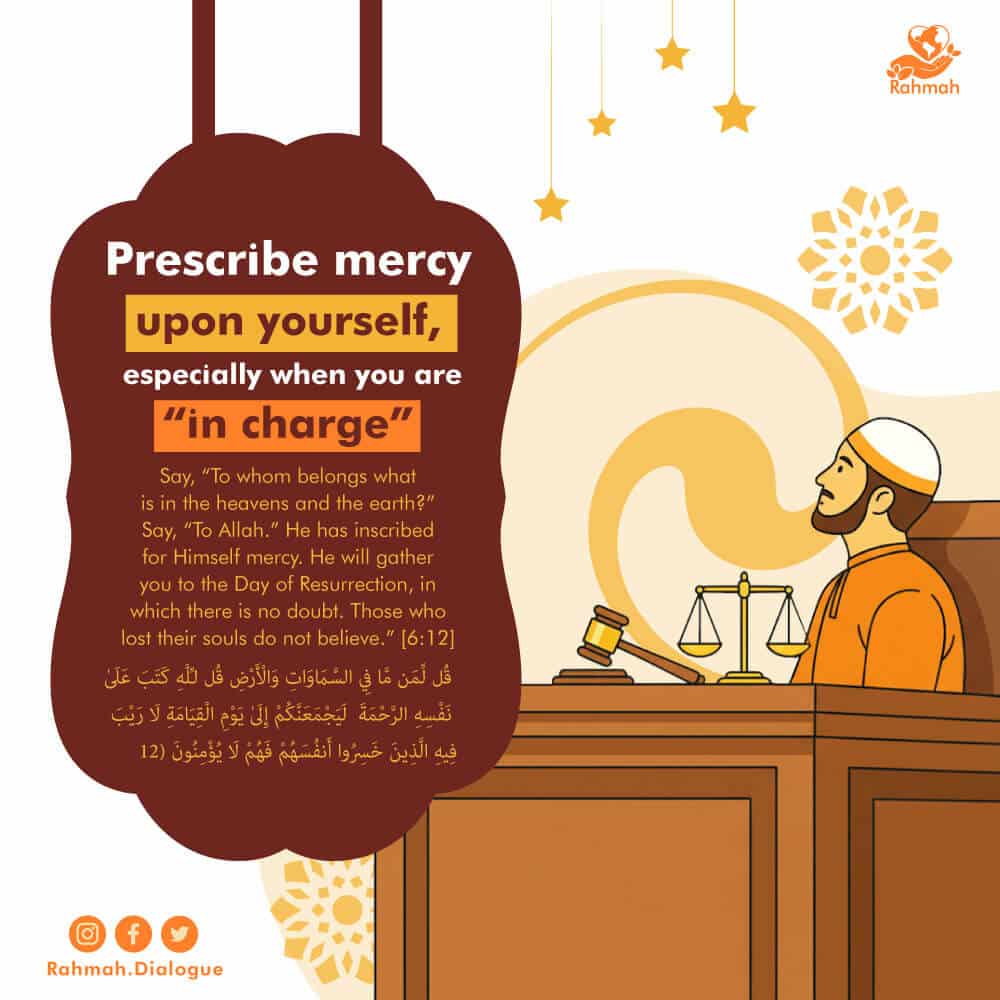
The Responsibility of the Leader Many people believe that being “in charge” means being the toughest person in the room. We often associate leadership with authority, discipline, and making sure everyone follows the rules. While organization is important, the Quran introduces a higher standard for those in power: the obligation to be merciful, even when you have the right to be firm.
Mercy as an Obligation A central concept in Islam is that the Creator has “prescribed mercy upon Himself.” This means that although the Divine has ultimate power, He chooses to deal with His creation through compassion. For humans, this is a lesson in Qudwa, which the Glossary of Islamic Terms defines as an “example” or “model.” As leaders, we are encouraged to model our behavior after this divine quality. If the most powerful being is merciful, how can we, who are limited, justify being harsh?
The Heart of a Leader In the glossary, the term Rahmah is defined as “mercy” or “compassion.” For someone in a position of authority, Rahmah means looking at the people under your care with a “soft heart.” It means being willing to overlook small mistakes and focusing on the growth of others rather than just their output. This is the essence of Ihsan—striving for excellence in your character by treating others better than they might expect.
Power is a Trust Every leadership role is an Amana, or a “trust.” You have been given authority as a test of your character. A leader who is harsh might get results in the short term, but they lose the respect and the hearts of their people. By prescribing mercy upon yourself, you protect your own soul from the disease of Kibr (arrogance). You realize that your role is to serve and protect, not just to command.
Let’s Find the Path Together At Diálogo Rahmah, we understand that being a leader—whether at home or at work—is stressful. It is easy to lose your patience when things go wrong. We offer a space to discuss how the values of mercy and compassion can make you a more effective and peaceful leader.
Do you find it difficult to balance discipline with mercy? We invite you to a free, private conversation with a Muslim expert. We are here to listen to your challenges and share insights on how leading with mercy can lead to more meaningful connections.
Reach out to us at Rahmah Dialogue today to start your conversation.


 English
 Español
 Português do Brasil
 Français
 Português
 Tagalog
 日本語
日本語 简体中文
简体中文 Русский
 Italiano
 Deutsch
 Türkçe
 العربية