
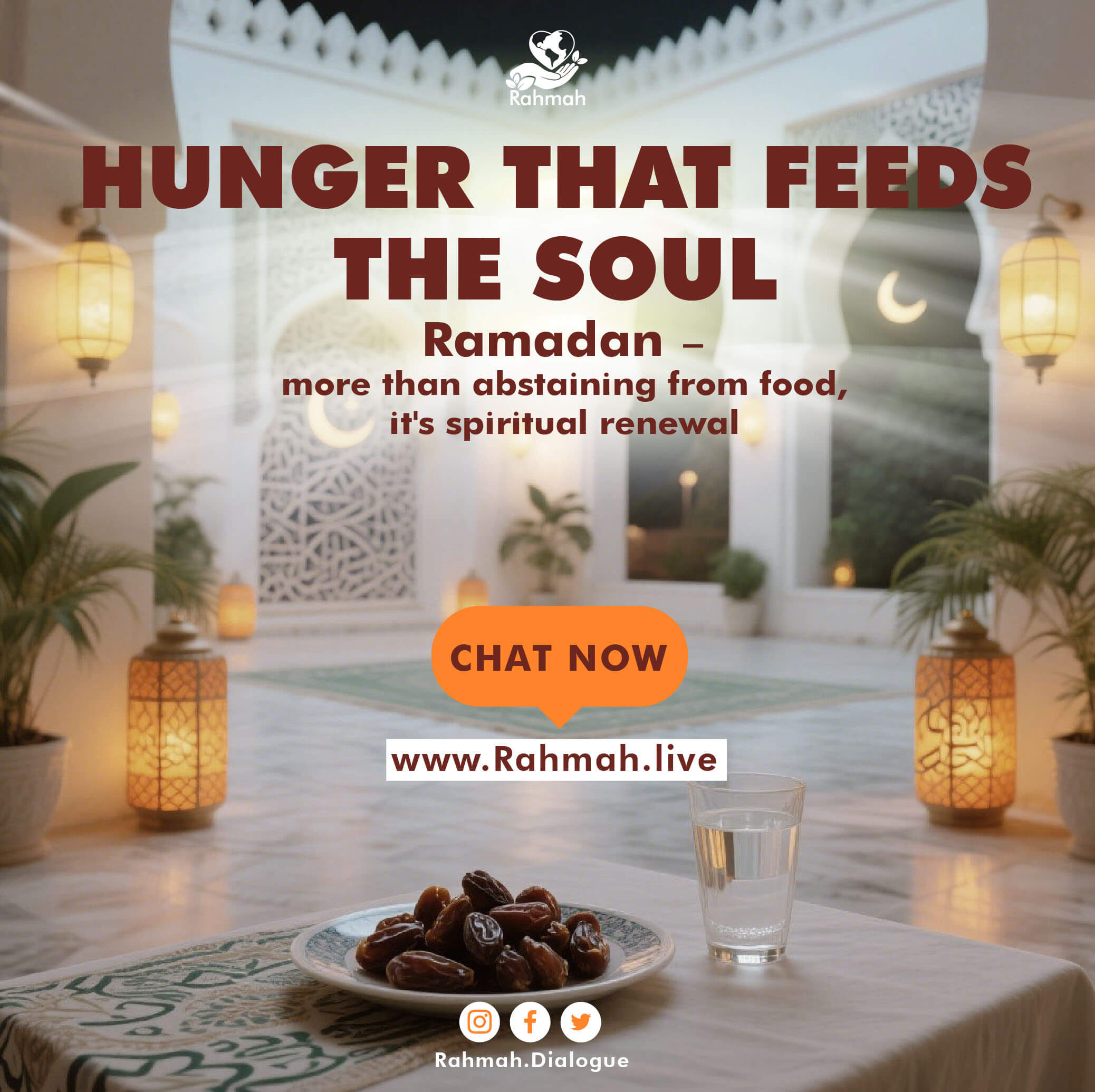
Introduction: Can Deprivation be a Gift?
In an age that chases instant satisfaction for every desire and worships endless consumption, Fasting (Sawm/صوم) comes to present a different challenge: Can you say “no” to a natural instinct like hunger and thirst for a higher purpose?In the “Tree of Faith,” fasting represents the process of “pruning” and refining.
It is the time when we remove the extra burdens that weigh down our souls. Fasting in Islam is not a ritual to punish the body; it is a yearly “School of Willpower” that aims to raise humans from the level of instinct to the level of mindfulness and God-consciousness (Taqwa/تقوى).
The Great Fast: Beyond Staying Away from Food
True fasting in Islam is the “fasting of the senses and the heart” before it is the fasting of the stomach. It is a complete system based on:
- Silent Sincerity (Ikhlas/إخلاص): Fasting is a “private” act of worship. No one can know for sure if you are fasting except God. This builds “self-monitoring” and ensures the heart is acting for God, not for show.
- The Soul’s Mastery Over Matter: By controlling the strongest human desires, a person learns that “willpower” is the true leader, and the body is a servant to the soul, not its master.
- Refining Behavior: Islam sets a golden rule: “Whoever does not give up false speech and evil actions, God has no need for them to give up their food and drink.” The goal is not hunger, but for the tongue to fast from lying, the heart from hatred, and the hand from harming others.
The Social Impact: The Unified Language of Hunger
Why was fasting made obligatory for everyone at the same time? To turn the individual experience into a “shared emotional state”:
- Unity of Human Feeling: When the wealthy person feels hungry, they don’t just read about poverty in books; they “experience” it in their veins. This voluntary hunger is the strongest driver for “social empathy,” softening hearts to give to others.
- Equality in its Best Form: In Ramadan, all differences fall away. The king and the servant, the strong and the weak—everyone waits for the same moment of sunset (Maghrib/مغرب) to have their meal (Iftar/إفطار). It is a practical lesson in “shared human destiny.”
- Active Solidarity: Ramadan is the month of “generosity,” where community initiatives and feeding the needy double, turning society into a beehive of mercy and cooperation.
Investing in the Self: Benefits Beyond the Spirit
Although it is a spiritual worship, modern science is discovering the wisdom in “resting the digestive system.” Fasting gives the body a chance for “self-cleaning” and cell renewal. It improves mental focus, proving that Islamic teachings are like a “manual” for maintaining both the human body and soul.
Conclusion: Fasting for a Better World
Fasting Ramadan is a 30-day “training course.” Its goal is to produce a person who is more disciplined, more sensitive to others, and stronger in will. It is an invitation to discover that we can live with “less” material and “more” meaning and love.
We invite you to explore the secrets of this ritual with us: How can temporary abstinence give us permanent freedom from our desires? And how can this month be a starting point for a society based on Taqwa—mindfulness of God in every action and kindness to every living being?



 English
 Español
 Português do Brasil
 Français
 Português
 Tagalog
 日本語
日本語 简体中文
简体中文 Русский
 Italiano
 Deutsch
 Türkçe
 العربية