
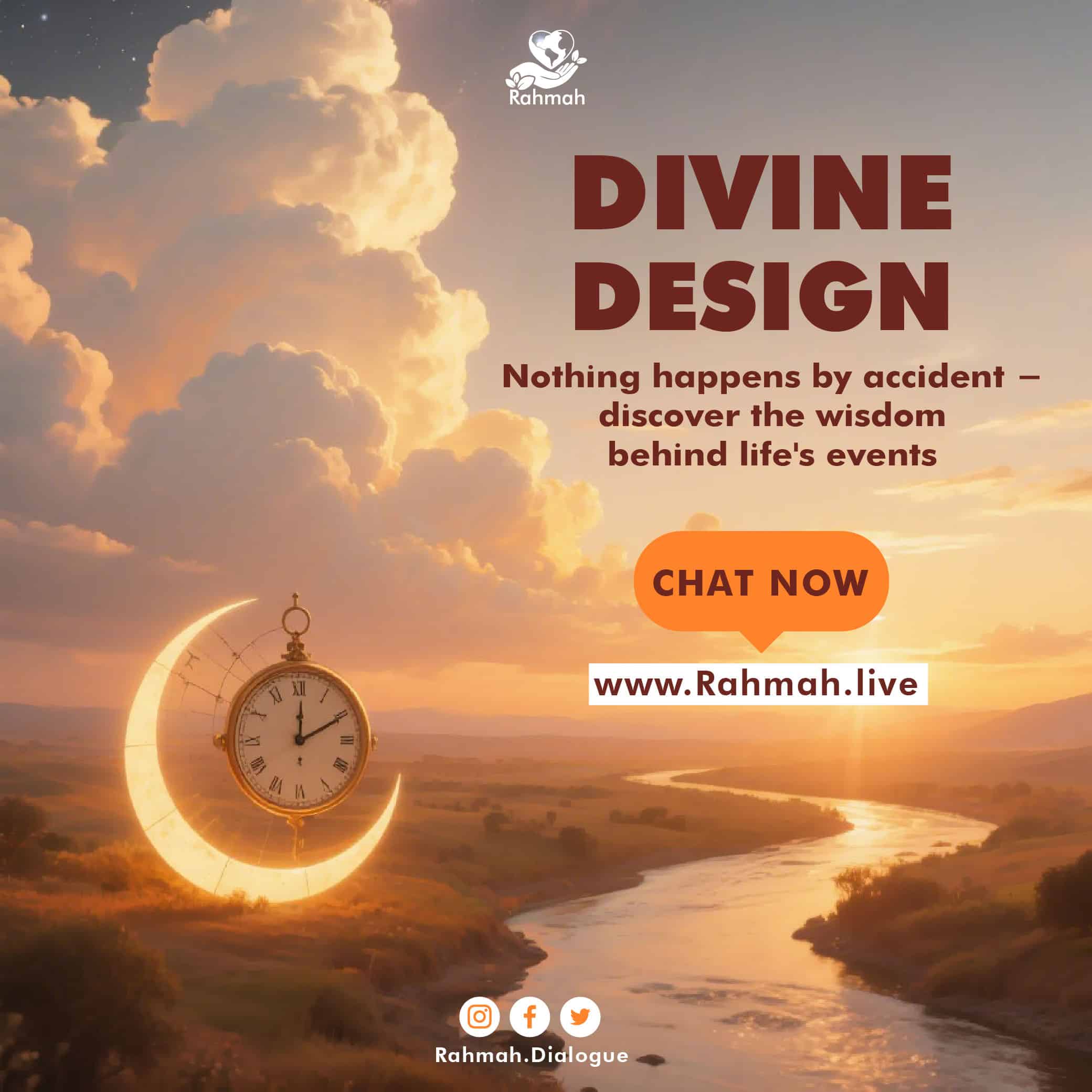
Introduction: The Mystery of “Control” in a Changing World
In a world that worships “total control” and pushes people toward extreme anxiety about the future, many find themselves trapped between high ambition and the crushing weight of disappointment. Are we solely responsible for every detail of our lives? Or does the universe have a “plan” that goes beyond our limited will?
In the “Tree of Faith,” belief in Destiny (Al-Qadar/القدر) represents the seeds and the soil. It is the certainty that whatever happens was never meant to miss you, and that a Higher Divine Wisdom precedes and accompanies every event. Faith in destiny in Islam is not a call to give up; it is a “way of life” that frees us from the chains of anxiety and gives us the strength to move forward, no matter the circumstances.
Destiny: Eternal Knowledge and Cosmic Order
Believing in Qadar means accepting that this universe is not a place of chaos, but a precise structure based on four pillars:
- All-Encompassing Knowledge: Knowing that God’s knowledge surrounds everything—the past, the present, and what is yet to come.
- The Record (Al-Kitabah/الكتابة): That every movement and moment is part of a precise cosmic system, reflecting the greatness of Divine planning.
- The Executed Will (Al-Mashii’ah/المشيئة): That the Creator’s will is the umbrella under which all existence moves; nothing happens by accident.
- Creation and Origination: That God is the Giver of existence to every action and the provider of talents and powers.
The Golden Balance: Effort vs. Trust
This is where the true beauty of the concept appears. In Islam, belief in destiny does not cancel out “freedom of choice” or the “necessity of work.” Instead, it pushes you to give your absolute best effort (taking the means) as if effort is everything, and then to put your trust in God (Tawakkul/توكل) as if those means are nothing.
- Striving is a Duty: A believer is required to study, work, seek medical treatment, and plan for the future. Striving itself is part of “God’s destiny.”
- Responsibility: Humans are held accountable for their choices and intentions, which establishes the concept of “moral accountability.”
Behavioral Impact: Peace in the Middle of Storms
How does faith in destiny change our psychological and social reality?
- Freedom from the Deadly “If”: When a person does their best and things don’t go as planned, faith in Qadar protects them from destructive regret. It closes the door of the past and opens a window of “Contentment” (Rida/رضا) and learning from experience.
- Strength and Resilience: A believer in destiny does not break during tragedies; they see them as a “test” or a “hidden wisdom” they may not understand yet. This makes them more able to stand up and try again.
- Humility in Success: When a believer achieves a great goal, they don’t fall into the trap of arrogance or think they are a “miracle worker.” They recognize God’s grace and destiny that provided the means, keeping them humble and connected to the true source of power.
The Proof of Wisdom: Why Does Pain Happen?
Islam suggests that a human’s view of events is like looking through a “keyhole,” while Divine Wisdom sees the “whole painting.” Many things a person hated at first turned out to be their salvation, and many things they desired turned out to be their downfall. Faith in destiny is absolute “trust” in the perfection of the Creator’s knowledge and mercy, even when we don’t see the reasons.
Conclusion: Living with a Reassured Heart
Faith in destiny is the mercy that gives us inner peace in a noisy world. It turns human anxiety into “confident tranquility” (Sakinah/سكينة). It makes work an act of worship, patience a form of heroism, and contentment a taste of paradise on earth. It is a call to live a “productive” life—planning smartly, working hard, and leaving the results to the Lord of all people with a reassured heart.
We invite you to reflect on this deep concept: How can the certainty that “what reached you was never meant to miss you” change your view of failure and success? How can we build a society that strives for change while being content with what God has decreed?
 English
 Español
 Português do Brasil
 Français
 Português
 Tagalog
 日本語
日本語 简体中文
简体中文 Русский
 Italiano
 Deutsch
 Türkçe
 العربية