
Introduction: Can Moral Perfection Exist in a Human?
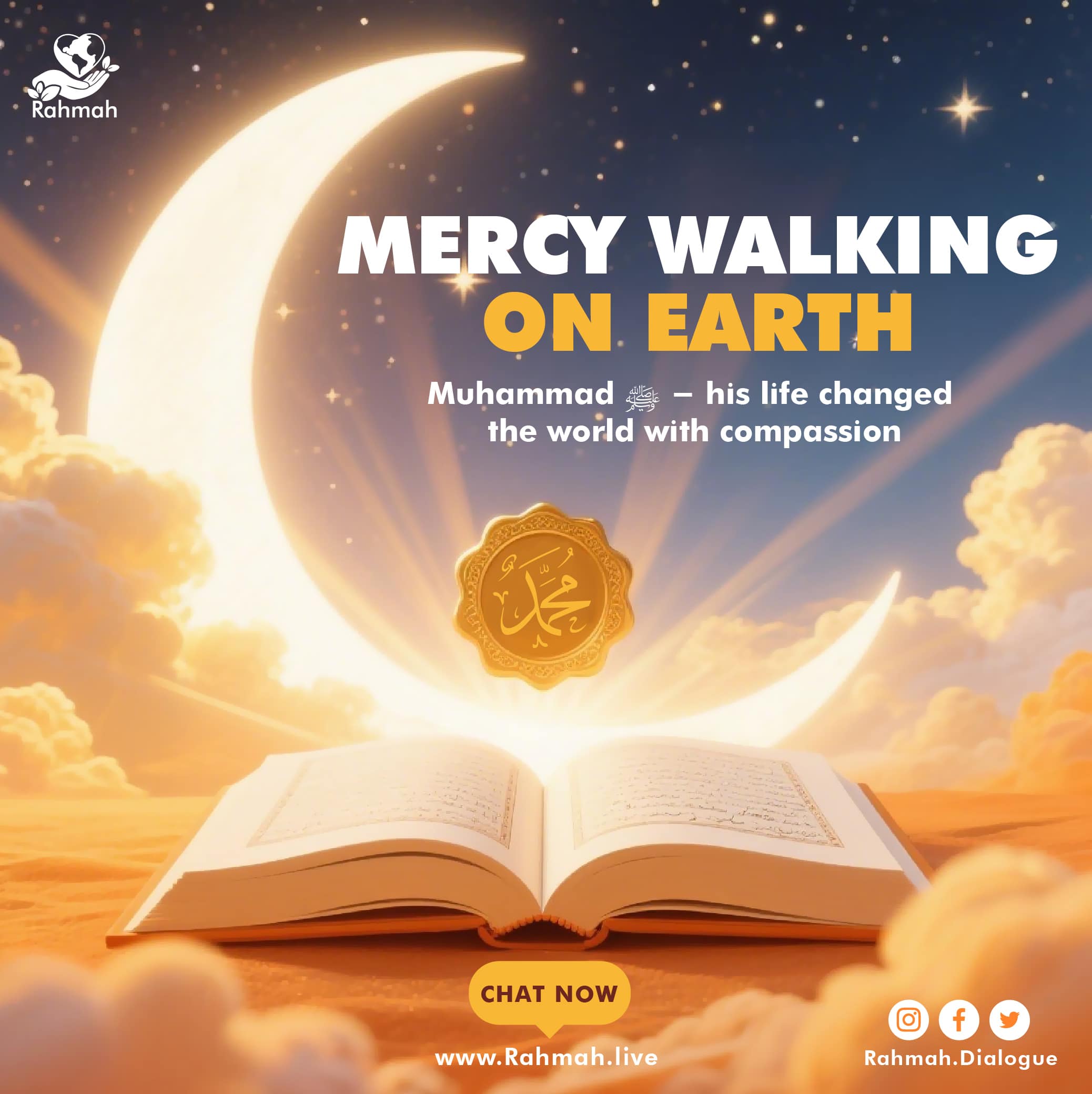
While philosophies offer theories about the “Perfect Man,” Islamic history provides a living reality where the highest human meanings were embodied. In the “Tree of Faith,” believing in Muhammad ﷺ represents the completion of the fruit. He is not just a messenger to a specific people, but the “Seal of Prophecy” (Khatam an-Nubuwwah/خاتم النبوة). He came to unite the heritage of all prophets into one complete way of life that speaks to the human soul in every time and place.
To believe in him is to believe in the man described as a “Mercy to the Worlds” (Rahmah lil-‘Alamin/رحمة للعالمين), who did not come to cancel what came before him, but to “perfect noble character.”
Belonging to This Path: More Than Just Belief
Believing in the Prophet Muhammad ﷺ in Islam goes beyond just recognizing his historical existence; it is a “Contract of Love and Following.” This belonging stands on three pillars:
- Finality and Completeness: Believing that he is the final link in the chain of guidance. His message is the “final word” from Heaven to Earth, making him the reference for anyone searching for the truth.
- Clarification and Teaching: He was the practical, living explanation of Divine values. If the Quran is the “manual,” his life (Sirah/سيرة) and traditions (Sunnah/سنة) are the “application.” He shows us how to live these values in the markets, in our homes, and with our enemies as well as our friends.
- Love as a Motive for Action: In Islam, love is not a passive emotion; it is fuel for change. To “love the Prophet” means to follow his footsteps in honesty, trustworthiness (Amanah/أمانة), and kindness to the weak.
The Prophet’s Biography: An Inspiring Human Epic
The life of Muhammad ﷺ is a unique human treasure because it covers all human experiences. He lived as an orphan to teach us resilience, worked as a shepherd and a merchant to teach us hard work, led a nation to teach us justice, and was a husband and father to teach us affection and kindness.
- In Peace: He was a model for dialogue and keeping promises.
- In Hardship: He was an example of patience (Sabr/صبر) and standing firm on principles.
- With Others: He established the values of respect and the rights of neighbors, even with those who disagreed with his faith.
The Impact on the Individual and Society
Following this model builds what we call a “Living Islamic Conscience.” A person who takes Muhammad ﷺ as a role model finds themselves committed to:
- Excellence (Itqan/إتقان): Because “God loves that when you do a job, you do it with excellence.”
- Universal Mercy: Which extends even to animals and the environment (as seen in his instructions to be kind to animals and to plant trees).
- Humble Leadership: Despite being a prophet and a leader, he sat among his companions as one of them, without distinguishing himself by his appearance or where he sat.
Conclusion: An Invitation to Meet the “Human” in Muhammad ﷺ
Belief in Muhammad ﷺ is a call to raise the human soul to its highest moral potential. It is not just faith in a person, but a commitment to all the values of nobility and beauty he represented. We believe the world today, with all its conflicts, needs more than ever to read this life story with fairness and love.
We invite you to explore the features of this great personality—not just to talk about history, but to discover how the light of this final message can guide us toward a society built on justice, mercy, and beauty.

 English
 Español
 Português do Brasil
 Français
 Português
 Tagalog
 日本語
日本語 简体中文
简体中文 Русский
 Italiano
 Deutsch
 Türkçe
 العربية