
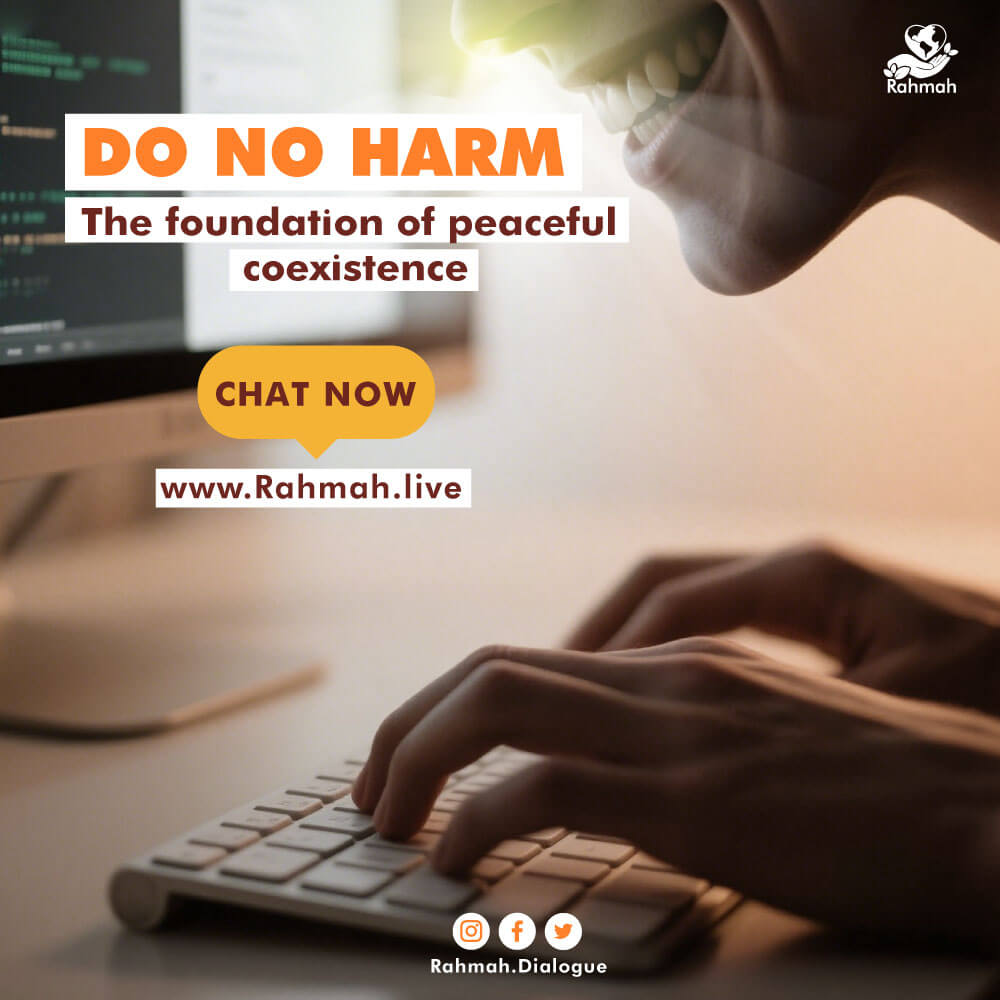
Introduction: Are People Safe from Your Tongue and Your Hand?
In the realm of Islam, the sincerity of one’s faith is measured by the degree of security people feel in your presence. A Muslim is not merely one who prays and fasts, but rather one from whose harm people are safe. In the “Tree of Faith,” the branch of “Refraining from Harming Others” represents the “Fortified Fence” that protects the fruit from transgression and preserves the garden’s peace and tranquility. Islam has designated the avoidance of evil as a “Charity” (Sadaqah) that an individual gives to themselves, confirming that “abstaining” from the forbidden and the disliked is a righteous deed that weighs heavily in the Scale and pleases the Most Merciful.
Refraining from harm in Islam is the “Jihad of the Soul” against whims. A true believer disciplines their limbs so they do not extend in malice and restrains their tongue so it does not utter falsehood, certain that the blood, wealth, and honor of others are sacred and forbidden to violate.
The Philosophy of Abstinence: “It is a Charity from You to Yourself”
The Prophet ﷺ outlined the features of this branch when he considered withholding evil from people an act of charity. This principle rests on authentic spiritual pillars:
- Defining the True Muslim: The Prophet ﷺ summarized the essence of belonging to this religion by saying: “A Muslim is the one from whose tongue and hand the Muslims are safe.” Peace is the origin, and causing harm is a departure from the path of faith.
- Purifying Society through Silence and Serenity: Refraining from harm uproots discord before it ignites. Whoever restrains their hand from striking, their tongue from insulting, and their soul from cheating has established a pillar of peace upon which society depends.
- Salvation on the Day of Resurrection: A believer knows that the “Bankrupt” (Muflis) is one who arrives with great acts of worship but had struck this person or insulted that one, causing their rewards to perish. Thus, refraining from harm is the “Guardian” that protects one’s balance of good deeds.
Manifestations of Refraining from Harm: The Believer’s Piety in Dealing with Creation
This branch manifests in a believer’s conduct, making them a gentle and easy-going person whom others trust with their lives and affairs:
- Refraining from Verbal Harm: Rising above backbiting, gossip, mockery, and name-calling. A believer knows that a word can separate loved ones or destroy a home, so they muzzle their tongue except for what is good.
- Refraining from Physical Harm: Avoiding physical assault, bothering people in their paths, or disturbing their peace with loud noises or reckless behavior. Instead, they ensure their presence is light and blessed.
- Refraining from Heartfelt and Transactional Harm: By abandoning envy and resentment toward Muslims, avoiding fraud in trade, stalling in the payment of rights, or terrifying others—even in jest. All these are forms of harm forbidden by Sharia.
Spiritual and Social Impact: A Society of Tranquility and Trust
When society members commit to refraining from harm, magnificent gains are achieved that preserve the nation’s entity:
- The Prevalence of Psychological Security: People sleep secure in their honor and wealth because they live among believers who view refraining from harm as a religious duty, which reduces tension and conflict.
- Consolidating Affection: Safety from harm opens the doors of love. Humans are naturally inclined toward those who do not disturb or hurt them; thus, the bonds of brotherhood are strengthened, and souls are cleared of grudges.
- Training in Self-Control: Adhering to this branch cultivates a high capacity for “restraining anger” and deliberation, building a balanced personality capable of facing provocations with forbearance and wisdom.
Spiritual Accountability: “Allah is Observant of Intentions and Actions”
This branch calls us to examine our inner selves before our outer actions:
- Sensing the Creator’s Observation: A believer refrains from harm even when no human observer is present, out of modesty before God, who knows the “treachery of the eyes and what the hearts conceal.”
- Remembering the Consequence of Injustice: The certainty that harm is “Injustice” (Zulm), and injustice will be “darkness” on the Day of Resurrection.
Conclusion: A Safety Through Which You Gain and a Paradise That Elevates You
The branch of refraining from harming people is the foundation of social ethics in Islam. It tells us that true religiosity is withholding evil before performing good. Whoever restrains themselves from harming God’s servants, God will grant them tranquility in this world and a “Seat of Sincerity” in the presence of a Sovereign Perfect in Ability.
We invite you to reflect on this refined etiquette in “Compassionate Dialogue”: How can simply “abstaining from evil” raise a person to the rank of the charitable? And how do the values of “Safety and Refraining from Harm” contribute to building a cohesive Islamic society ruled by justice, affection, and peace?


 English
 Español
 Português do Brasil
 Français
 Português
 Tagalog
 日本語
日本語 简体中文
简体中文 Русский
 Italiano
 Deutsch
 Türkçe
 العربية