
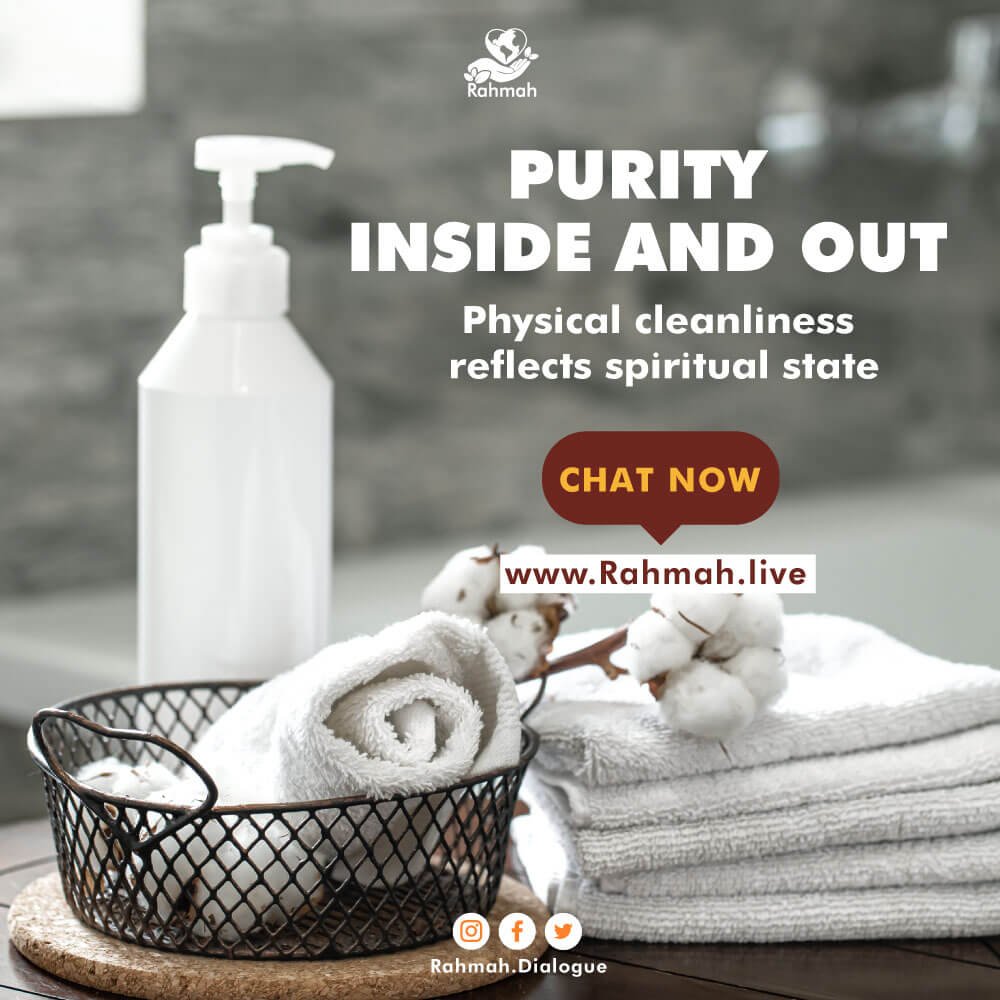
Introduction: Have You Welcomed Your Day with the Light of Purity?
In the scale of Islam, purity (Taharah) is not merely a hygienic habit; it is an “Act of Worship and Proximity” that opens the gates of Heaven for the servant. In the “Tree of Faith,” the branch of “Purification” represents the “Water that Nourishes the Roots.” Faith cannot thrive in a heart filled with defilement, and Allah does not accept a prayer without purification. The Prophet ﷺ declared purification to be “half of faith,” emphasizing that half of a believer’s religion is shedding impurities (whether physical or spiritual), while the other half is adorning oneself with virtues, in accordance with the verse: {Indeed, Allah loves those who are constantly repentant and loves those who purify themselves}.
Purification in Islam is a “Preparation to Meet the King.” A true believer washes the impurities of their body five times a day to be pure in their sanctuary (Mihrab), and washes the impurities of their heart through repentance to be pure in the sanctuary of life, certain that “Allah is Beautiful and loves beauty.”
The Philosophy of Purity: “And Your Clothing Purify”
Revelation has formulated a methodology that makes cleanliness a religious necessity inseparable from the believer, resting on firm spiritual pillars:
- Unity of the Two Purities (Physical and Spiritual): Islam does not distinguish between the cleanliness of the body and the refinement of the soul. Ablution (Wudu) washes away sins with the drops of water, and the ritual bath (Ghusl) removes major impurity and renews vitality, so the believer becomes pure in both essence and attributes.
- Elevating the Faith-Based Appearance: Islam commands the cleaning of clothes and the use of pleasant scents, especially during Friday prayers and congregations. A believer is an ambassador of their religion, known by their pleasant fragrance and the neatness of their attire, making them beloved by creation and close to the angels.
- Safeguarding the Environment and Facilities: Purity extends to the “purity of the earth.” Islam forbids polluting people’s water sources or their shaded resting spots and encourages keeping mosques and pathways clean, transforming the entire community into an oasis of purity and serenity.
Requirements of Character: The Demeanor of the Purified Believer
This branch manifests in the believer’s daily life, making them a wholesome person who radiates light:
- Perfecting Ablution and Venerating the Miswak: A believer is keen on completing their ablution perfectly without wasting water. They use the Miswak (tooth-stick) to purify their mouth, following the Prophet’s ﷺ words: “The Miswak is a purification for the mouth and a cause for the Pleasure of the Lord.”
- Reviving the Sunnahs of Nature (Fitra): A believer maintains cleanliness by trimming nails, keeping hair neat, and performing the Friday bath, remaining in the most beautiful natural form in which Allah created them, in harmony with a universe that leans toward purity and beauty.
- Cleanliness of Food and Drink: A believer purifies not only their body but also their food vessels, covering them and washing their hands before and after meals, ensuring their nourishment is wholesome and clean to support the vitality needed for worship.
Spiritual and Social Impact: A Society of Purity and Dignity
When the character of purification prevails, magnificent fruits emerge that preserve the splendor of the Muslim society:
- Prevention of Ailments and Epidemics: Repeated ablution and periodic bathing are the first line of defense against diseases. Thus, Islam builds a society of healthy bodies, strong in the face of afflictions, ensuring resources are not drained by negligence-related illnesses.
- Delight of the Heart and Tranquility: Cleanliness brings psychological comfort and dispels gloom. A clean environment and a pure body foster optimism and vigor, making society members more productive and joyful in life.
- Spreading a Culture of Beauty: A society that venerates purification is one that respects public taste. You will find no filth in its streets nor ugliness in its vistas; instead, it is organized and pleasing to the eye—a witness to the sophistication and greatness of this religion.
Spiritual Accountability: “And If You Are in a State of Impurity, Purify Yourselves”
This branch calls us to evoke the awe of standing before Allah:
- Modesty Before Allah’s Gaze: A believer is ashamed for their Lord to see them in a state of filth, knowing that Allah looks at their heart and deeds. They strive to purify their outward appearance as a mirror of their inward sincerity.
- Sensing Spiritual Elevation: Purification raises the servant’s status. The purified are those beloved by Allah, and they are the ones who will come on the Day of Resurrection with “radiant faces, hands, and feet” from the traces of ablution.
Conclusion: Purity of the Body and the Key to Paradise
The branch of purification is the covenant of “Beauty and Perfection.” It tells us that a religion that began with {And your clothing purify} is a religion that wants humans to live honored, dignified, and clean in all their affairs. Whoever preserves the purity of their outer and inner self deserves to be among the successful party of Allah.
We invite you to reflect on this elevation of cleanliness in “Rahmah Dialogue”: How can a simple ablution be half of faith and a bridge to Divine love? And how do the values of “Purification and Purity” contribute to building a cohesive Islamic society ruled by justice, affection, and peace?


 English
 Español
 Português do Brasil
 Français
 Português
 Tagalog
 日本語
日本語 简体中文
简体中文 Русский
 Italiano
 Deutsch
 Türkçe
 العربية