
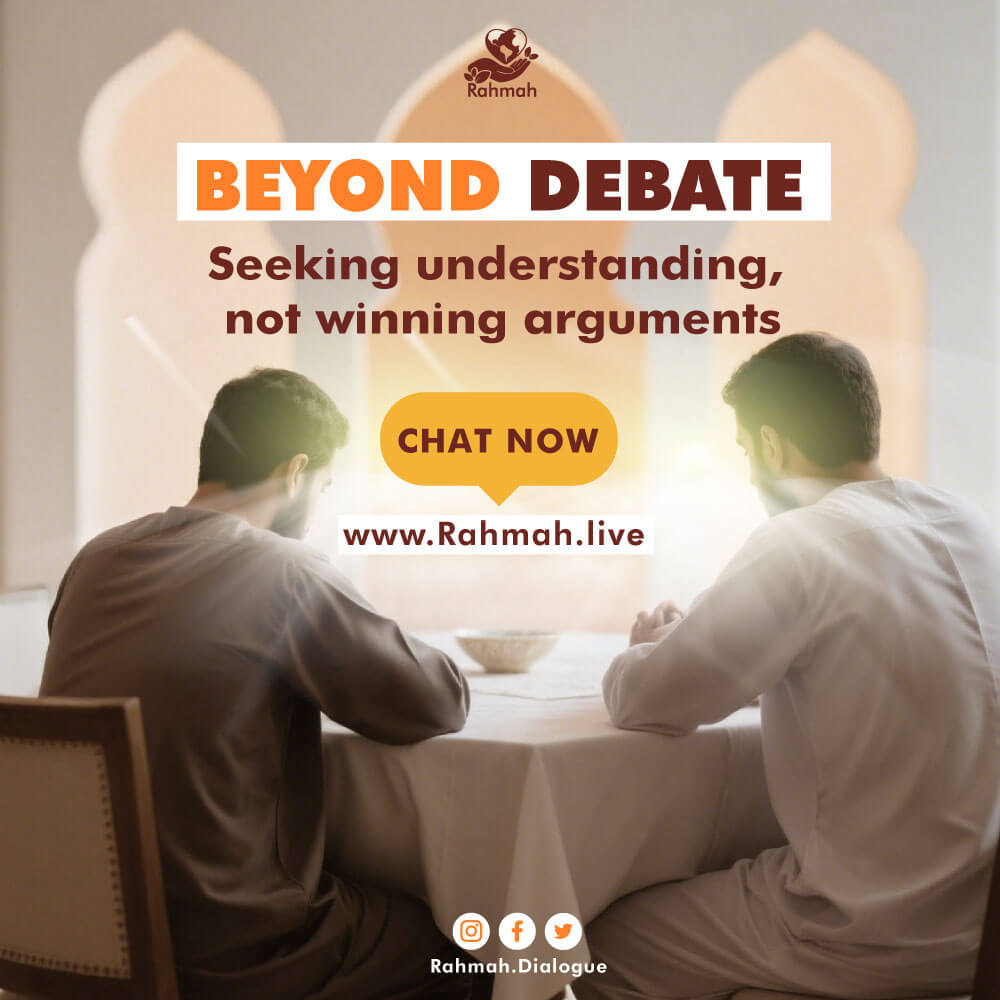
Introduction: Is the Joy of Winning an Argument Worth Losing a Heart?
In gatherings, dialogue often turns into an arena for dominance and showing intellectual superiority, where the truth is lost amidst the noise. In the “Tree of Faith,” the branch of “Avoiding Vain Argumentation” (Tark al-Mira’/ترك المراء) represents the “Tranquility that Protects the Fruit.” It prevents the winds of stubbornness from tearing the leaves of brotherhood and clouding the atmosphere of affection. Islam has made avoiding pointless debate a testament to intellectual maturity and a heart purified from arrogance.
In Islam, avoiding argumentation is not a sign of weakness or an inability to provide evidence; rather, it is a display of “Willpower and Strength.” It is a soul rising above vain talk, prioritizing God’s pleasure and social harmony over the fleeting thrill of victory.
The Philosophy of Avoiding Argumentation: “A House in the Outskirts of Paradise”
The Prophet ﷺ gave a powerful incentive to the soul when he said: “I guarantee a house in the outskirts of Paradise for the one who abandons argumentation even if he is right.” This high station rests on authentic spiritual pillars:
- Humility for the Truth: A believer does not argue to be called “knowledgeable” or “eloquent.” They seek the truth wherever it may be. If the truth appears on their opponent’s tongue, they accept it with an open heart; if they encounter stubbornness, they remain silent with dignity.
- Soundness of the Heart: Pointless argumentation breeds resentment, fuels grudges, and separates loved ones. Avoiding it is a fence that preserves “Love for the Sake of God” and prevents Satan from inciting conflict between people.
- Conserving Time for the Beneficial: Argumentation is an exhaustion of life in things of no avail. A believer ensures their speech is remembrance, their silence is reflection, and their utterance is wisdom.
Blameworthy Argumentation vs. Praiseworthy Dialogue: The Sharia Scale
Islam distinguishes carefully between forms of speech to keep the believer’s insight clear:
- Dialogue with What is Best (Al-Jidal bi-llati hiya ahsan): This is the praised and commanded form, where the intent is to show the truth with gentleness, mercy, and evidence, without insults or superiority.
- Vain Argumentation (Al-Mira’): This is the blameworthy form aimed at “silencing the opponent” and showing off personal skill, even through falsehood or arrogance. This is what erases the light of faith from one’s face.
Spiritual and Social Impact: A Society of Calm and Dignity
When the character of avoiding argumentation prevails, life becomes more pleasant:
- Growth of Affection and Unity: The “fever of stubbornness” vanishes from gatherings. Differences of opinion become a source of breadth rather than division, strengthening the social fabric.
- Sobriety of the Believer’s Personality: A believer is known by their dignity; they do not get dragged into every shout or provocation. They pass by vain talk with grace, elevating their status in both worlds.
- Clarity of Mind for Reflection: Staying silent during an argument opens horizons for sound thinking, making the individual wiser in perceiving reality.
How to Break the Lust for Argumentation?
This branch calls for the struggle of the self (Jihad al-Nafs) through:
- Remembering the Reward: Visualizing the “House in Paradise” at the height of a discussion, making the afterlife more beloved to us than a temporary victory.
- Self-Fairness: Training oneself to say “I do not know” or “You might be right,” which are the traits of the great.
- Graceful Withdrawal: If a believer sees that talk has turned into vanity or mockery, they withdraw gracefully, preserving their religion and honor.
Conclusion: Dignity in Silence
The branch of avoiding vain argumentation is a call to elevate our dialogues to the horizons of refined etiquette. It tells us that strength is in self-mastery during anger, and status is in humility before the truth. Whoever leaves an argument seeking God’s pleasure, God replaces it with tranquility in their heart and elevation in their rank.
We invite you to reflect on this wise etiquette: How can avoiding conflict open doors for real understanding? And how do the values of “Gentleness and Humility” contribute to building a cohesive Islamic society ruled by justice, affection, and peace?

 English
 Español
 Português do Brasil
 Français
 Português
 Tagalog
 日本語
日本語 简体中文
简体中文 Русский
 Italiano
 Deutsch
 Türkçe
 العربية