
Introduction: Have You Left Behind a Safe Path for Your Brothers?
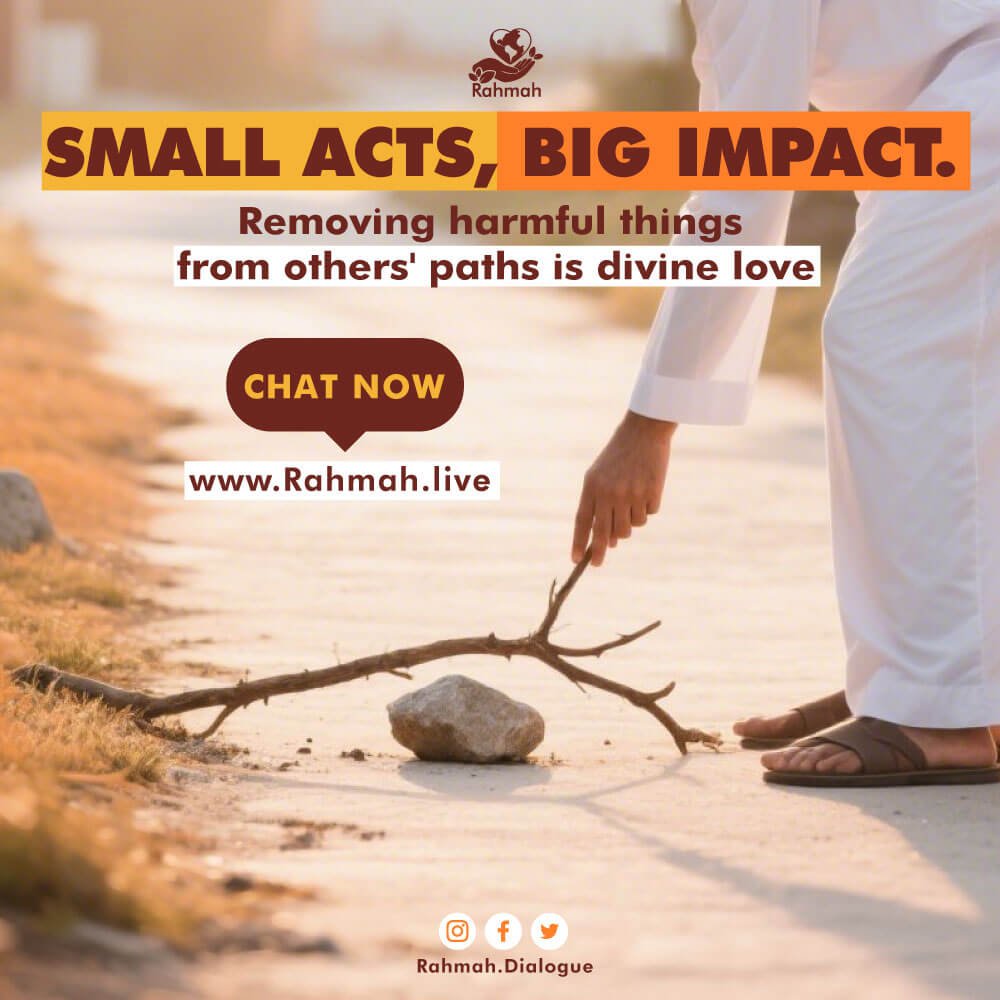
In the scale of Islam, faith consists of “seventy-some branches.” The Prophet ﷺ designated the highest as the declaration of Monotheism (Tawhid) and the humblest as removing harm from the road, linking Heaven and Earth through the bond of serving creation. In the “Tree of Faith,” this branch represents the “Low-Hanging Fruit”; its blessing is harvested by every passerby. It tells us that a Muslim is not an isolated being in a cell, but a force of goodness walking on two feet—refusing to be harmed and refusing to let others stumble over what they can remove, certain that “Removing harm from the road is a charity.”
Removing harm in Islam is the “Etiquette of Vicegerency” (Khilafah). A true believer sees every stone, thorn, or filth in the road as a test for the mercy in their heart, removing it out of love for Allah and compassion for His servants.
The Philosophy of Passing Excellence: “While a Man Was Walking, He Found a Thorny Branch and Pushed it Aside”
Revelation has formulated a methodology that turns the road into a “Sanctuary” for worship, resting on firm spiritual pillars:
- Mercy for the Vulnerable: An obstacle might seem small to you, but it is a major barrier for an elderly person, a running child, or a weak animal. Thus, removing it is an embodiment of the Prophetic saying: “The merciful are shown mercy by the Most Merciful.”
- Venerating the Right of the Way: The road belongs to Allah and His creation. Encumbering it with harm is a “collective injustice,” while purifying it is a “fulfillment of rights” and a way of thanking Allah for the blessings of movement and safety.
- Forgiveness of Sins through Small Deeds: The Prophet ﷺ told us of a man for whom Allah granted forgiveness and gratitude because he moved a thorny branch away from people’s path. This teaches us that Allah’s pleasure may lie in a simple act that your eye sees as small, but which is great in the sight of God.
Requirements of Character: The Believer’s Demeanor in the Paths of People
This branch manifests in a believer’s conduct, making them “blessed wherever they are”:
- Vigilance and Initiative: A believer does not wait for an authority to do the job; their hand precedes their eye. If they see something harmful, they bend to remove it with a kind heart and a cheerful face, counting their steps and breaths as being for the sake of Allah.
- Avoiding Harm at the Source: Before removing harm, a believer ensures they cause none. They do not litter, obstruct a path, or spit in a walkway, for a Muslim is “one from whose tongue and hand other Muslims are safe.”
- Inclusivity in Removal: In the concept of faith, “harm” is broad. It includes stones and thorns, waste that offends the senses, words that violate modesty, and even potholes that lie in wait for travelers. Anything that prevents life from flowing peacefully is “harm” worthy of removal.
Spiritual and Social Impact: A Society of Affection and Beauty
When the character of removing harm prevails, magnificent fruits emerge that preserve the splendor of the Muslim society:
- Promoting Individual Responsibility: Every individual becomes a “guardian” of their city’s beauty and safety, easing the burden on the collective and making the public interest a personal concern in every believer’s heart.
- Planting Love and Harmony: When people see a person humbling themselves to remove a harm from them, their hearts fill with prayers and love for that person. Grudges vanish, and a society of appreciation prevails.
- The Blessing of Health and Safety: Keeping paths clear of obstacles reduces injuries and accidents and protects the environment from pollution, reflecting the sophistication of Islamic teachings that preceded modern laws in protecting the “quality of life.”
Spiritual Accountability: “Allah Thanked Him and Forgave Him”
This branch calls us to scrutinize our intentions in our subtlest actions:
- Sincerity and Secrecy: A believer removes harm even if no one sees them, for their Lord sees. They do not seek thanks from passersby but hope this act will be a reason for Allah to overlook their own sins.
- Venerating “Small” Good Deeds: The certainty that Paradise can be earned by a “thorny branch” pushed aside makes the believer never belittle any good deed, urging them to constantly be mindful of Allah in their journeys.
Conclusion: Steps on Earth and Ranks in the Heavens
The branch of removing harm from the road is the “Beauty of Faith” in its finest form. It tells us that the religion which cares for the safety of your feet on the road is the most concerned for the safety of your heart on the Day of Resurrection. Whoever purifies the path of people in this world, Allah paves for them a path to Paradise.
With “Removing Harm,” we conclude our journey through the Branches of Faith, the final link that connects word to deed and spirit to matter. We at “Rahmah Dialogue” are delighted to accompany you always as you discover how to make every day a chance to plant a branch of faith, so that your tree may grow with lush shade and wholesome fruit.


 English
 Español
 Português do Brasil
 Français
 Português
 Tagalog
 日本語
日本語 简体中文
简体中文 Русский
 Italiano
 Deutsch
 Türkçe
 العربية